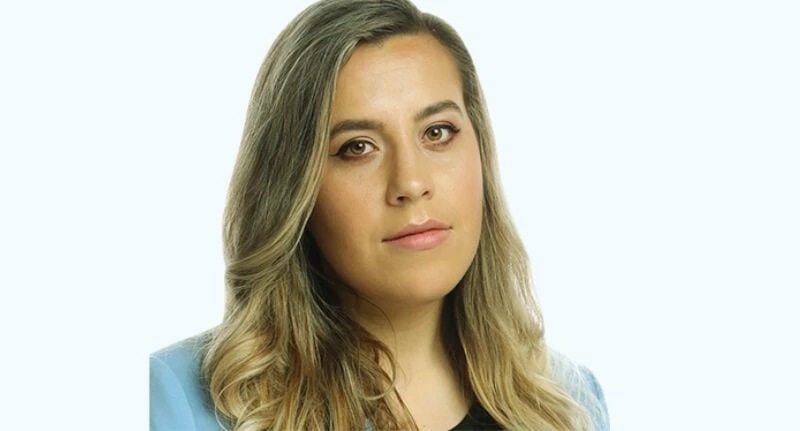

For nearly a decade, Clare Armstrong has been one of the most recognisable names in Australian political journalism. From her early years in regional newsrooms to her appointment as the ABC’s Chief Digital Political Correspondent, her rise mirrors the evolution of political reporting itself-from print deadlines to real-time digital coverage & constant public scrutiny.
Behind the byline is a reporter known for tenacity, precision & an ability to translate Canberra politics into stories that resonate beyond Parliament House. Yet her journey-from News Corp to the ABC-has also sparked debate about bias, media influence & the boundaries between commercial & public journalism.
Profile-Biography, Education & Career Milestones
Early Life & Education
Clare Armstrong began her career in regional Queensland, starting at the Townsville Bulletin. Covering local councils, state politics & community issues gave her a grounding in how decisions in government affect people’s daily lives.
She later studied journalism and arts, believed to be at the University of Queensland, where she first developed a focus on public policy & media ethics. Armstrong has said those years helped her understand “how politics plays out in people’s everyday lives,” shaping her interest in accountability reporting.
In 2021, she received the Wallace Brown Award, given annually to the best young journalist in the federal press gallery-an early sign of her growing stature among Canberra reporters.
Rise Through News Corp
Armstrong joined News Corp Australia in the late 2010s as a federal political reporter for The Daily Telegraph. Her strong coverage of national issues & fast, disciplined reporting soon saw her promoted to National Political Editor across multiple mastheads-The Daily Telegraph, Herald Sun, Adelaide Advertiser & Courier Mail.
Operating from the Canberra press gallery, she led teams covering leadership battles, budgets, foreign affairs & election campaigns. Known for her clean writing & authoritative tone, Armstrong earned a reputation as one of News Corp’s most reliable political voices.
She often remarked that “every decision in Canberra has a ripple effect across the country,” a phrase that came to define her reporting philosophy-keeping national policy accessible to readers who live far from Parliament House.
Appointment at the ABC
In August 2025, the ABC announced Armstrong’s appointment as its Chief Digital Political Correspondent, replacing Jacob Greber. Her new role positions her at the centre of the broadcaster’s digital political bureau in Canberra, where she will lead integrated coverage across television, radio & online platforms.
Upon her appointment, Armstrong said:
“I’m excited to take on this new role as the ABC’s Chief Digital Political Correspondent. Every decision in Canberra has a ripple effect across the country and I’m looking forward to breaking stories and providing insight & analysis on the issues that matter most to Australians.”
ABC Director of News Justin Stevens praised her experience and skill:
“Clare is a hugely talented & highly experienced political journalist & an acute analyst of national politics with a track record of breaking news. ABC audiences already know her from her regular appearances on the Insiders couch. She’s a terrific addition to our strong Canberra team.”
Her move was both a personal milestone & a moment that reignited debate about the crossover between Murdoch-owned newsrooms and the public broadcaster-a sign of how intertwined Australia’s media institutions have become.

Politics & Journalism-Major Stories & Analysis Style
Reporting Philosophy
Clare Armstrong combines the rigour of press-gallery journalism with a digital-first mindset. Her stories cut through complex policy debates to show how national decisions shape communities, households & industries.
She focuses on transparency, accountability & tone, preferring direct quotes & plain language to editorial spin. Colleagues describe her as methodical, grounded & rarely swayed by the day’s noise-the kind of journalist who lets facts breathe.
Major Stories
Albo’s Finally Finished Pandering to Beijing – July 2025
In this widely discussed Daily Telegraph piece, Armstrong covered Prime Minister Anthony Albanese’s six-day visit to China. She detailed stops in Shanghai, Beijing & Chengdu, capturing both the diplomacy & the domestic politics surrounding the trip.
Albanese defended his approach, saying, “Australia has engaged in multiple exercises in this region,” after Coalition MPs accused him of “photo ops” & “soft diplomacy.”
Armstrong balanced these perspectives, portraying the visit as a strategic test of Australia’s relationship with China & the government’s ability to project strength while pursuing engagement.
We Did Not Help Brides of ISIS – October 2025
Armstrong tackled one of the year’s most controversial national-security stories: the return of several Australian women & children from Syrian detention camps.
Albanese told reporters, “Australia did not provide assistance,” emphasising that the women, as citizens, “have the right to enter Australia.”
Opposition Senator James Paterson accused the government of being “complicit,” saying it failed to use powers allowing temporary exclusion for those associated with terrorist organisations.
Armstrong’s report unpacked the logistics of their return-travel through Beirut, DNA testing & citizenship confirmation & while maintaining a neutral tone in a highly charged debate.
Medicare Fraud Investigation (with Mark Buttler)
In collaboration with senior reporter Mark Buttler, Armstrong revealed a massive $8 million Medicare scam allegedly run by detainees in immigration facilities who used stolen identities to claim rebates.
The story quoted Services Australia officials confirming that several bank accounts had been frozen. It demonstrated Armstrong’s ability to extend beyond politics into policy oversight, highlighting the intersection of crime, bureaucracy & taxpayer accountability.
First Question Time of the 48th Parliament
Armstrong covered the symbolic opening of the 48th Parliament, noting that the chamber “looked different” with Sussan Ley at the opposition dispatch box-the first woman in that position since Julia Gillard.
Alongside SBS News’ Anna Henderson, she analysed how Labor’s super-majority & the presence of more female MPs changed the chamber’s tone. It was a reminder that representation itself can shape the national conversation.
Analytical Approach
Armstrong’s writing combines speed with substance. She builds her stories around verified facts, structured quotes & context rather than speculation.
As she transitions to the ABC, her work is expected to include live blogs, interactive data explainers, and real-time digital analysis, strengthening the link between Canberra reporting & public engagement.
Media Watch-Controversies, Criticism & Public Reactions
The Kabul Evacuation Story (2021)
One of Armstrong’s early stories became a lightning rod for criticism. Her Daily Telegraph article, Australia’s Last Plane Out of Kabul Held So Mum and Child Could Be Rescued, claimed that Scott Morrison personally delayed a RAAF flight to save a mother & baby.
Serving military personnel dismissed the story as impossible under operational protocol. Later reports showed that General Angus Campbell authorised the delay, not the Prime Minister.
The episode drew commentary from media analysts who said it illustrated how political narratives can sometimes slip through in high-pressure news environments. Critics questioned whether this kind of storytelling could “be unlearned at the ABC.”
The “Hamas” Front Page & Transition to the ABC
Armstrong’s final Daily Telegraph front page, which ran a photo of Anthony Albanese beneath the headline A Win for Hamas, reignited debate about tone & editorial judgment at News Corp.
When she joined the ABC soon after, commentators such as Paul Begley and Daanyal Saeed offered opposing takes-Begley calling her hire part of a “Murdoch Trojan Horse” trend & Saeed describing her as “poached” talent for a crucial role.
This contrast captured the duality of Armstrong’s reputation: a formidable journalist respected across the press gallery, but one whose background ensures she’ll be watched closely at the ABC.
Public & Industry Reactions
Within Canberra, Armstrong is viewed as professional and composed-a reporter who asks sharp questions without theatrics. Colleagues praise her discipline & capacity to meet tight deadlines without losing accuracy.
On social media, she keeps her voice restrained, posting links & updates but rarely opinions. This deliberate neutrality has helped her maintain credibility across partisan divides.
Her move to the public broadcaster also reignited an old debate: is ABC News drawing too heavily from Murdoch alumni, or simply recruiting the best journalists available? For some, Armstrong’s hire demonstrates the ABC’s willingness to embrace digital-savvy reporters; for others, it blurs the line between public service & corporate influence.
Current Status & Professional Outlook
Clare Armstrong is now embedded within the ABC Canberra bureau, coordinating political content for the network’s digital platforms, 7.30 & the ABC News App.
Her remit is to modernise how Australians consume political journalism-bringing immediacy & clarity to issues that shape national life. She continues to appear on Insiders, where her concise analysis has helped redefine the program’s generational mix.
Inside the broadcaster, her arrival represents a broader shift toward real-time, data-driven political storytelling, connecting the speed of online media with the ABC’s editorial discipline.
Conclusion-Legacy & Future Impact
Clare Armstrong’s story captures the crossroads of modern journalism: legacy institutions meeting digital disruption & the personal credibility of reporters becoming central to public trust.
From a young regional journalist in Townsville to a national political editor & now a leader at the ABC, her career charts how persistence & adaptability can carry a reporter through Australia’s shifting media landscape.
Her critics see traces of tabloid intensity in her writing; her supporters see sharp instincts, determination & an ability to thrive under pressure. Both are true-and both explain why she’s become a focal point in the conversation about media independence and journalistic integrity.
As Armstrong begins her tenure at the ABC, she stands as both a symbol of change & continuity-a reporter shaped by the competitive pace of the Murdoch press, now steering political coverage for the nation’s most scrutinised newsroom.
Whether she reshapes digital political reporting or remains a lightning rod in Australia’s media debate, Clare Armstrong has already secured her place as one of the most influential journalists of her generation-a name that continues to shape how Australians read, watch & argue about politics.


Leave a Reply