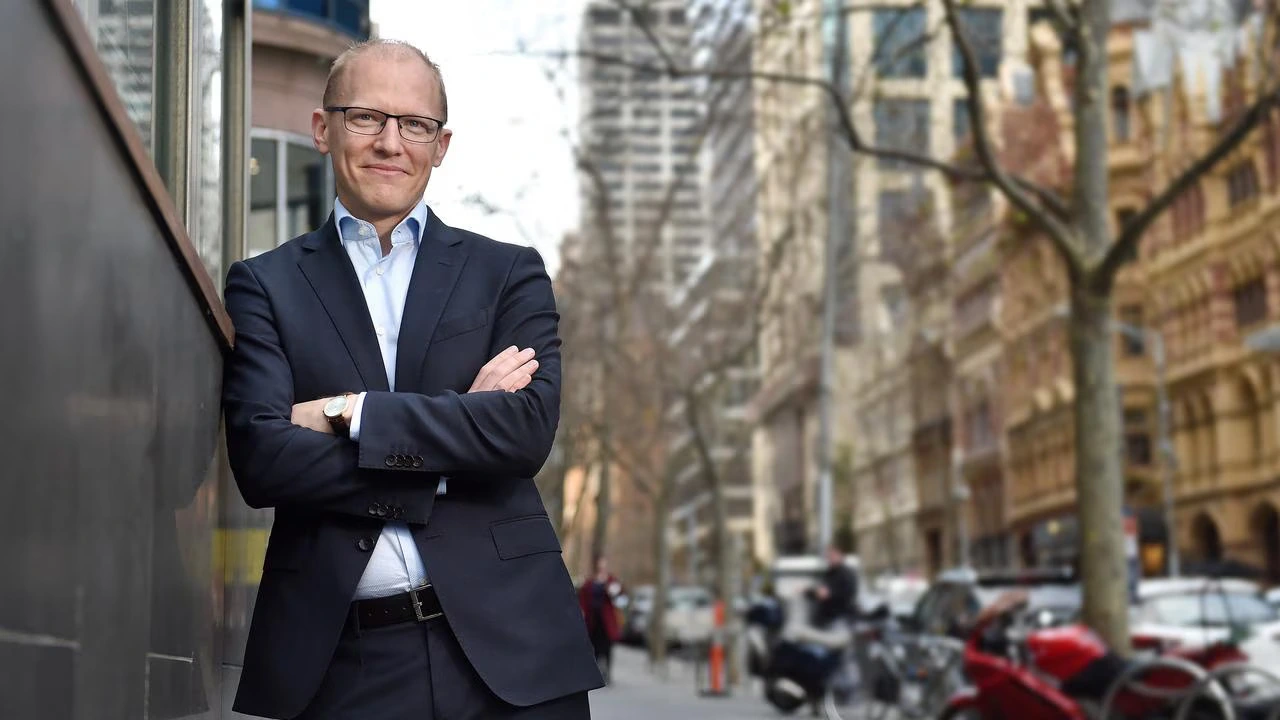

People often bring up Daniel Westerman when they talk about Australia’s quick energy transition. As the Chief Executive Officer and Managing Director of the Australian Energy Market Operator (AEMO), he is in charge of making decisions that affect the supply of electricity and gas, the speed of decarbonisation, and the stability of the National Electricity Market (NEM).
Daniel Westerman is in charge of AEMO, which is working on a future where homes, businesses, and essential services can still have power even when 100% of it comes from renewable sources. It is a delicate balance between ambition and dependability, and it has made him one of the most important people in Australia’s energy system.
Daniel Westerman’s early training and international experience
Daniel Westerman’s story starts in Melbourne, where he went to Melbourne High School and then the University of Melbourne to study engineering. He got a Bachelor of Science in Mechanical Engineering and then went on to get MBAs from the London Business School and the Melbourne Business School. This gave him a strong mix of technical and business skills.
Professional organisations’ biographical notes say that Daniel Westerman has degrees in Engineering and Mathematics from the University of Melbourne and an MBA from Melbourne Business School. He is also a Chartered Engineer and a Fellow of the Australian Academy of Technological Sciences and Engineering, the Energy Institute, and the Institution of Engineering and Technology, among other organisations.
Before entering the energy market, Daniel Westerman worked for big companies like Ford Motor Company and McKinsey & Company. These jobs taught him about how businesses work, how to think about systems, and how to make plans. These are the skills he uses to run one of the most complicated power systems in the world.
Daniel Westerman at National Grid-building renewables and networks
Daniel Westerman’s international career began at National Grid plc, a London-listed electricity and gas utility that owns and runs the high-voltage transmission network across Great Britain.
Daniel Westerman worked for National Grid as a senior executive in charge of engineering, planning, and operational control of the transmission system. He also worked on the development of distributed energy systems like rooftop solar, storage, and advanced metering.
He was later the Chief Transformation Officer and President of Renewable Energy, where he led a company-wide transformation programme and grew a large renewable energy business in the US. This experience, which involved connecting old networks with new technologies, is often given as one of the reasons he was hired to run AEMO during a time of unprecedented change.
Daniel Westerman is in charge of AEMO
AEMO said in February 2021 that Daniel Westerman would take over as CEO and Managing Director on May 17, 2021, after Audrey Zibelman. His appointment came after an international search that attracted interest from well-known energy leaders from all over the world.
Daniel Westerman is the CEO and Managing Director of AEMO. He is in charge of the company’s strategy and operations for electricity and gas systems. He works with market participants, regulators, and the nine Australian governments that own the operator. He is also a member of the Energy Security Board, which gives advice to energy ministers on how to grow the market.
Daniel Westerman is described in professional summaries as having a national leadership role in the energy transition, “planning the energy systems of tomorrow while managing the systems of today.” This is a short summary of the two pressures he faces.
Daniel Westerman and the goal of 100% instant renewables
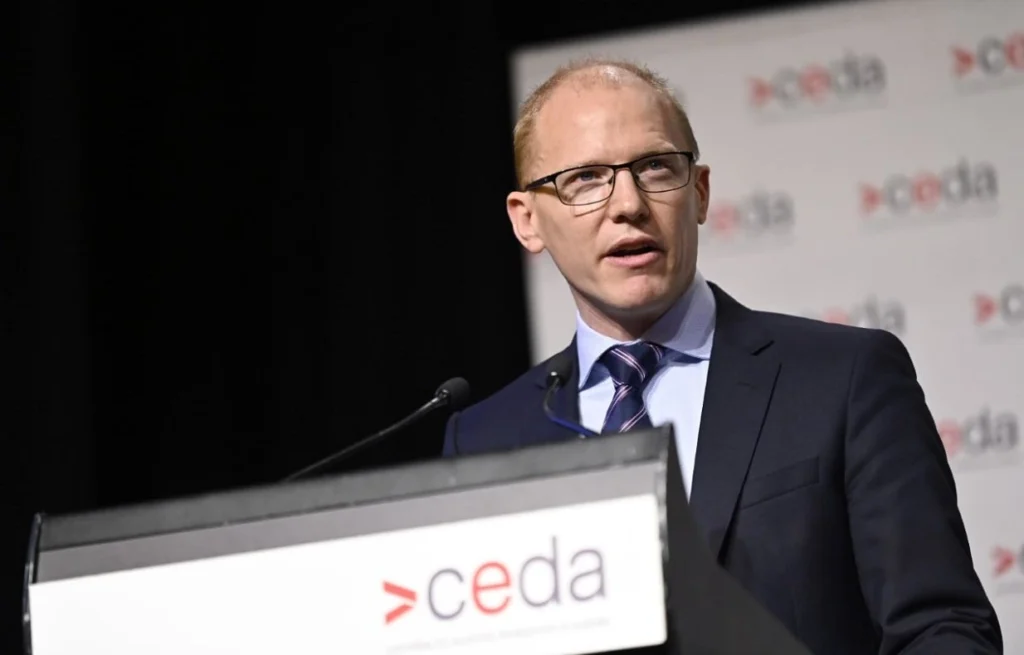
Daniel Westerman’s life changed forever in the middle of 2021, not long after he became head of AEMO. He gave his first big public speech and said that by 2025, he wanted to make Australia’s main grids able to handle periods of 100% instantaneous renewable energy.
Daniel Westerman made it clear that by “instantaneous,” he meant any single moment in time, usually a half-hour period, and not an annual average. The goal was higher than the previous goal of 75% instant renewables, and it showed that people were more confident in what modern power systems could do with the right technical settings.
Daniel Westerman also pointed out that AEMO’s control rooms were already seeing instantaneous wind and solar penetrations in the NEM rise from about 38% in 2018 to 52% in 2020. Western Australia reached 65% and South Australia reached 100% instantaneous renewable penetration for the first time in the world.
He called the push for a 100 percent capable grid “uncharted territory for a large, independent grid anywhere in the world.” He stressed that the goal was not based on ideology but on economics, technology, and policy direction.
The way Daniel Westerman talks about the energy transition
Daniel Westerman talks about the energy transition in speeches and interviews as complicated but possible if the right investments and rules are in place.
Daniel Westerman called the change “a kaleidoscope of technological, economic, political, and social challenges for all of us” at a CEDA event in 2021. The metaphor makes it clear that he thinks the change is more than just a simple change of technology; it’s dynamic and multi-dimensional.
Daniel Westerman spoke at the Clean Energy Council’s Clean Energy Summit more recently and said that AEMO’s “control rooms are becoming mission control for one of the most complex and critical challenges of our time: how we manage this evolution of our energy systems.”
Daniel Westerman spoke at Australian Energy Week 2023 about “managing the tensions in the energy transition to maximise the benefits for all Australians.” He talked about three main tensions: between today and tomorrow, between the parts and the whole, and between people and populations.
He talked about the need for momentum at the Australian Clean Energy Summit, saying, “We need to move forward with this energy transition to get all the benefits it will bring.” He also said that AEMO is working with a lot of other groups to deal with these tensions.
These statements paint Daniel Westerman as a technocratic communicator who stresses risk management, teamwork, and steady progress, but still supports ambitious renewable goals.
Daniel Westerman’s leadership has led to important events
Since Daniel Westerman joined AEMO, there have been both record-breaking amounts of renewable energy produced and a lot of detailed engineering work done to get the NEM ready for more renewable energy.
AEMO released the Engineering Roadmap to 100% Renewables in 2022. This document explained the technical requirements for running the NEM at up to 100% instantaneous renewable generation. These included system strength, frequency control, and voltage management. The CEO introduced the report, which laid out a clear path from planning to implementation.
AEMO’s data showed a lot of progress by 2025. Daniel Westerman said in an interview that was covered by international news that the NEM had recently reached more than 77 percent renewable generation for a half-hour period. This was mostly because of grid bottlenecks, not a lack of resources.
At the same time, South Australia has kept running for periods when renewable energy production is higher than local demand, sending extra energy to nearby areas. Rooftop solar has taken off, with about four million homes making their own power. Daniel Westerman has noticed that rooftop systems can sometimes meet more than half of NEM demand.
Daniel Westerman uses these milestones in his presentations, like an ATSE event in 2025 on “The transformation of Australia’s energy system,” where he was supposed to talk about investment needs and the shift from coal to wind, solar, and batteries, with the help of consumer energy resources like rooftop PV. Public event listings and institutional profiles show this.
Risks, criticism and the contested path of Daniel Westerman’s plan
Even though things have gotten better, Daniel Westerman’s agenda has not been without problems. With more renewable energy sources coming online and coal power plants shutting down, people are more worried about how reliable the system is, how strong it is, and how quickly it is changing.
In 2023, news stories about his keynote speech at Australian Energy Week focused on his warning that the energy transition was going “far too slowly” and that urgent investment was needed in transmission lines and firming technologies like pumped hydro, batteries, and flexible gas generation.
Transgrid, a transmission operator, later said that AEMO’s plan to run the NEM entirely on renewable energy at times starting in 2027 had “gaps to the minimum level of system strength” in New South Wales after the Eraring coal plant was scheduled to close. This was widely reported on in 2025. The report said that the grid could be unstable for a while until more synchronous condensers are put in place.
Daniel Westerman’s AEMO has pushed for changes to the rules in response to growing worries about timing. One of these changes is to extend the required notice period for closing coal plants from 3.5 to 5 years. The operator says that the current rules don’t give them enough time to plan and build new infrastructure, which makes blackouts, higher costs, and investments that aren’t coordinated more likely.
AEMO has also said that gas is still an important backup fuel for the short to medium term, even as renewables and storage grow. Before the 2025 federal election, Daniel Westerman publicly warned about the possibility of gas shortages and stressed that a reliable gas supply is still needed to support a grid with a lot of renewables and important industries.
These debates show that Daniel Westerman is under a lot of pressure from different sides. Some critics say that his goal of 100 percent renewables is too ambitious for system security, while others say that network and investment reform is not keeping up with his vision. His job is to keep the system stable every day while also dealing with this contested area.
Culture, governance and the leadership style of Daniel Westerman
People often say that Daniel Westerman is a leader who cares about culture, governance, and inclusion, in addition to his technical work. Profiles from the Australian Academy of Technological Sciences and Engineering say that he has created a “strong purpose-led and values-based culture” at AEMO. This culture is meant to make sure that energy is safe and reliable today and to help with the transition for the benefit of all Australians.
The same information shows Daniel Westerman’s role as a partner and adviser to governments and market participants, balancing the needs of state energy policies, industry investors, and consumers while keeping AEMO independent.
Daniel Westerman is a member of the Champions of Change Energy Group, which is a group of CEOs who want to promote gender equality in their companies. The group says that he is working hard to get more women involved in AEMO and the energy sector as a whole, as well as to create diverse talent pipelines for leadership positions.
These promises show that Daniel Westerman thinks that culture and governance are just as important as cables, substations, and control systems for a successful energy transition.
What Daniel Westerman’s choices mean for people who use energy
Daniel Westerman’s work at AEMO affects both short-term reliability and long-term prices and emissions for homes, businesses, and investors.
On the one hand, his goal of 100% instantaneous renewables and the Engineering Roadmap show that AEMO is getting the NEM ready for deep decarbonisation, with clear technical checkpoints for system strength, inertia, and frequency control.
On the other hand, AEMO’s calls under Daniel Westerman for more transmission, more firming capacity, and longer notice for coal closures show how expensive and risky it is to move too slowly on building infrastructure. Delays in big projects can make it harder for consumers to get cheap renewable energy. They can also make operators have to step in more often, which can raise costs.
Daniel Westerman’s public comments and AEMO’s planning documents, such as the Integrated System Plan and engineering frameworks, are important signs for investors about where the grid is going, what kinds of assets are needed, and how quickly they need to be built.
Daniel Westerman’s leadership will have a direct effect on everyday Australians in terms of whether the lights stay on during heatwaves, whether bill pressures ease over time as new resources connect, and whether the transition away from coal happens in a way that protects jobs and communities.
The changing legacy of Daniel Westerman
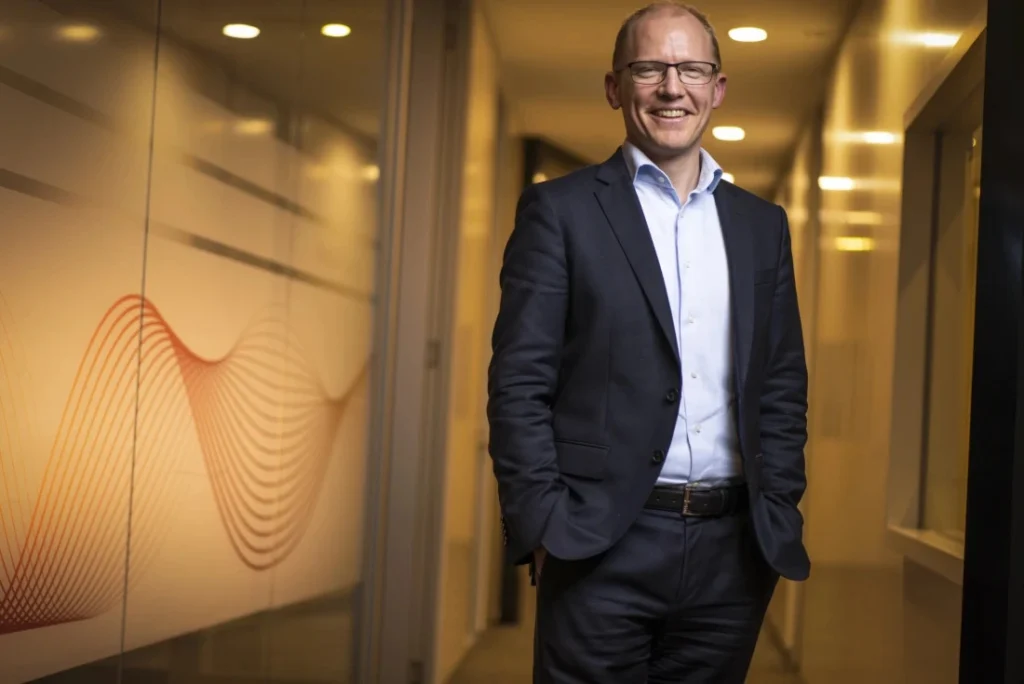
As of late 2025, Daniel Westerman is still in charge of AEMO. He is guiding the company through a time of record renewable energy generation, intense political scrutiny, and major network reform.
Three themes that are closely related to each other define his time in office:
- Ambition: a promise to make grids that can handle 100% instantaneous renewables and a nett zero energy system.
- Risk management means getting constant warnings about the strength of the system, the gas supply, and the need to invest more quickly in transmission and firming.
- Culture and teamwork: working hard to create a values-based, welcoming organisation and to work closely with governments, businesses, and communities.
People will probably judge Daniel Westerman in the future based on whether the NEM can move into a time of high-renewables without losing reliability and whether people listen to his calls for timely investment and regulatory reform. He is still one of the most important people in Australia’s energy story. His decisions, warnings, and plans affect Australians every time they turn on a light.
FOR MORE RELATED ARTICLES VISIT US AT AUSTRALIANMAGAZINE.COM.AU


Leave a Reply