

The government’s super tax changes have reshaped how Australia’s wealthiest & most vulnerable workers interact with the super system. While the policy no longer raises as much money as first planned, it strikes a delicate balance between fairness & sustainability.
Whether you see it as a backdown or a breakthrough, one thing’s clear — superannuation is once again at the centre of Australia’s financial future.
The Big Shake-Up in Super
If you’ve been following Australia’s superannuation news, you’ll know the debate around super tax changes has been intense. After months of criticism, back-and-forth consultation & political pressure, the Federal Government has officially redesigned its high-balance super tax plan.
The revised Division 296 tax — announced by Treasurer Jim Chalmers in October 2025 — is a major shift from the original 2023 proposal. It introduces new tiers, clearer rules & long-awaited fairness for both low-income earners & those with large super balances.
Here’s everything you need to know about the new super tax changes, why they happened & what they mean for your retirement savings.
Why the Super Tax Changes Were Needed
For years, Australia’s super system has given generous tax concessions to higher earners. In 2023, the government decided to fix what many economists called a “broken balance.” The original plan was simple — double the tax on earnings for balances over $3 million from 15% to 30%.
But there were two big problems:
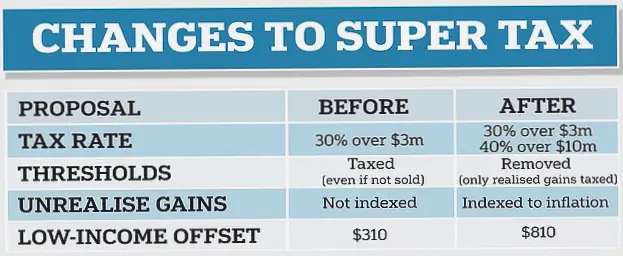
- No indexation. The $3 million threshold wasn’t linked to inflation, meaning more Australians would be caught over time (a phenomenon known as “tax creep”).
- Unrealised gains. The tax would apply not just to money actually earned, but to paper increases in asset values-even if those assets weren’t sold.
Farmers, retirees, and self-managed super fund (SMSF) owners warned this could force people to sell assets just to pay their tax. Accounting bodies, economists, and business groups called the plan “unworkable.”
October 2025-The Government Backflips
After nearly two years of resistance, Jim Chalmers and the Cabinet’s Expenditure Review Committee met on Friday, 10 October 2025, to finalise a new model. It was approved by Cabinet on Monday, 13 October, while Prime Minister Anthony Albanese was on leave.
At a press conference in Canberra, Chalmers admitted the government had “found another way to deliver on the same objectives.” He announced six major super tax changes:
- Unrealised gains scrapped – tax will now apply only to realised earnings.
- Indexation added – the $3m and $10m thresholds will rise with inflation.
- Two-tier system introduced – 30% on earnings between $3m–$10m, and 40% on earnings above $10m.
- Implementation delayed – start date moved to 1 July 2026.
- Defined-benefit schemes adjusted – special rules to ensure judges & politicians are treated equivalently.
- LISTO boosted – the Low Income Super Tax Offset rises from $500 to $810, with the income threshold lifted from $37,000 to $45,000 (effective from 1 July 2027).
Chalmers said, “We have always had indexation in our back pocket to get it through Parliament. These reforms maintain concessional treatment of super but make it fairer and more sustainable.”
How the New Super Tax System Works
Two New Tiers for High Balances
- Tier 1 ($3m–$10m): 30% tax on earnings (15% existing + 15% additional).
Tier 2 (Above $10m): 40% tax on earnings (15% existing + 25% additional).
The new Division 296 formula calculates how much of your total balance falls above each threshold & applies the corresponding additional rate.
Example 1:
If your super balance is $4 million, one quarter of your balance sits above $3 million. You’ll pay an additional 3.75% tax (15% × 1/4), giving an effective rate of 18.75% on earnings.
Example 2:
If your balance is $10 million, you’ll pay an effective rate of 25.5%.
Example 3:
At $20 million, the effective rate reaches about 32.75%.
These rates apply only to realised earnings — meaning income actually received, such as dividends, rent, or sold assets.
Capital Gains-No More “Paper Profits”
One of the most confusing & controversial aspects of the old proposal was the idea of taxing unrealised capital gains — increases in asset value that hadn’t yet been cashed in.
That’s now gone.
From 1 July 2026, the new system will tax only realised gains. To make this fair, Treasury confirmed that only capital gains made after July 2026 will count toward the higher tax.
In other words, if your shares or property rose in value before the new rules start, those past gains won’t be hit when you sell them later.
Funds will also reset the cost base of assets on 1 July 2026 for the purposes of the new tax, while keeping historical cost bases for ordinary income tax.
The Treasury and ATO will provide further guidance on technical issues such as:
- treatment of capital losses,
- franking credits,
- discount capital gains
- how realised earnings are attributed to individual members in SMSFs & APRA-regulated funds.
Impact on Low-Income Earners-A LISTO Boost
While much of the focus has been on the wealthiest Australians, the super tax changes also bring good news for lower-income workers.
The LISTO (Low Income Super Tax Offset) will increase from $500 to $810 & the income limit will rise from $37,000 to $45,000. This ensures low-paid workers — particularly women & part-time employees — no longer pay more tax on their super than they do on regular wages.
Chalmers said the reform would “help deliver a more secure retirement for 1.3 million Australians, around 60% of whom are women.”
According to Treasury, up to 3.1 million Australians will now qualify for LISTO, with an average boost of $410 per person & a potential $15,000 increase in retirement savings (in today’s dollars).
Budget Impact & Revenue Forecast
The changes will raise less money than originally planned — but the Treasurer insists they’re “fairer.”
- Original plan: $6.2 billion over four years.
- Revised forecast: $2 billion over four years.
- Budget shortfall: around $4.2 billion.
The first full year (2028–29) is expected to deliver around $2 billion in revenue, down from $2.7 billion under the old plan. Final figures will be confirmed in the 2025–26 Mid-Year Economic & Fiscal Outlook (MYEFO).
Who’s Affected by the Super Tax Changes
- Around 90,000 people have balances above $3 million (about 0.5% of super accounts).
- Around 8,000 people have balances above $10 million (roughly 0.1% of Australians with super).
- The average $10m+ balance is about $19 million, with an average annual tax concession dropping from $266,000 to $97,900 under the new rules.
These figures show that the changes target a very small, wealthy minority — while giving meaningful boosts to low-income earners through LISTO.
Industry Reaction-Relief & Support
The announcement sent what one expert called “waves of relief” through the super & accounting sectors.
Ainslie van Onselen, CEO of CA ANZ, said:
“By taking on feedback from a range of experts, the government has avoided the unfairness & implementation costs of taxing unrealised capital gains.”
Tony Greco, Senior Tax Adviser at the IPA, praised the shift, saying it “addresses one of the most contentious aspects in the original proposal” & gives “breathing room for better consultation.”
Peter Burgess, CEO of the SMSF Association, said:
“This will send waves of relief through the SMSF community. Taxing paper profits would have damaged small businesses, farmers & venture capital investors.”
Julie Abdalla, Head of Tax and Legal at The Tax Institute, called the reform “a significant policy improvement that better aligns with Australia’s capital gains tax regime.”
Mary Delahunty, CEO of ASFA, highlighted that low-income earners will finally stop being penalised:
“These reforms mean people earning under $45,000 are no longer taxed higher inside super than outside of it.”
Political Reactions-Backdown or Balance?
Not everyone applauded the Treasurer’s move.
Shadow Treasurer Ted O’Brien called it “a humiliating day for the Treasurer,” declaring, “Today is a victory for common sense & for everyday Australians who were going to be stung by this unfair tax.”
The Greens, led by Sarah Hanson-Young, said Labor had “gone weak on taxing the wealthy” & “let the rich off the hook.”
Independent MP Kate Chaney welcomed the rethink, saying, “Governments should be able to change their mind and fix legislation when they get it wrong.”
Nationals Leader David Littleproud claimed victory for farmers, arguing, “Labor’s plan would have forced families to sell land instead of passing it on. We’re relieved they’ve backflipped.”
Meanwhile, Paul Keating, the architect of Australia’s superannuation system, praised the new model. He said the reforms “restore much-needed equity following the Howard-Costello rampage of 2007” and bring “long-term peace of mind for retirees.”
Economists & Think-Tanks-A Softer Reform
Economic experts agree the backdown makes the system fairer — but also less ambitious.
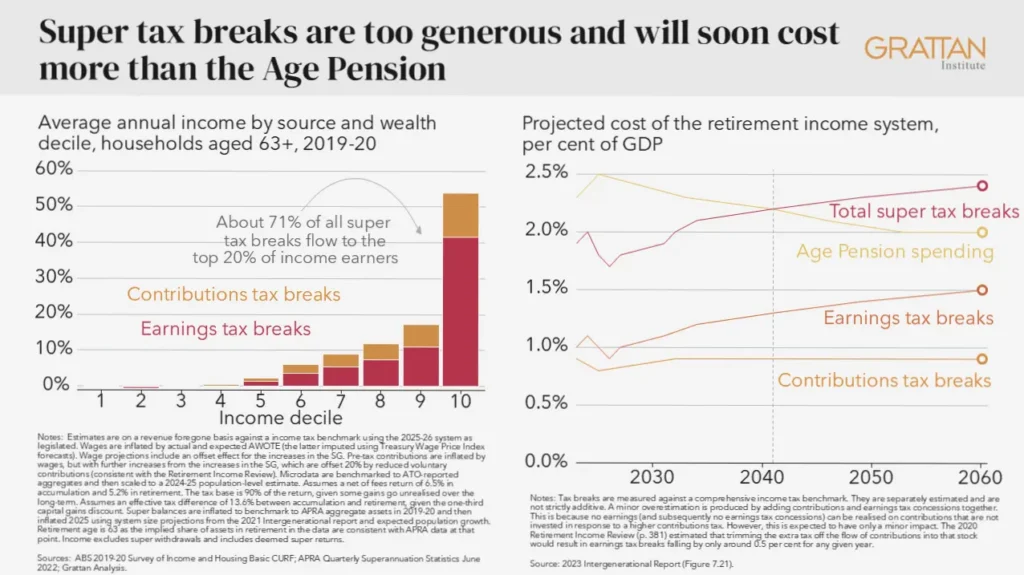
Brendan Coates from the Grattan Institute said he was “less confident in broader super tax reform today than yesterday,” adding that the changes “softened the impact of reform on high wealth holders.”
Critics note that indexing thresholds and dropping unrealised gains will reduce long-term revenue & limit the government’s ability to rebalance tax concessions that heavily favour the top 10%.
Some economists have renewed calls for a broader wealth tax or even an inheritance tax to address the growing intergenerational wealth divide. While such proposals aren’t on the government’s radar — & are still seen as political poison — they signal where the national tax conversation could be heading.
Practical Steps for SMSFs & High-Balance Holders
If you have more than $3 million in super, here’s how to prepare:
- Review your fund structure. Don’t rush to move assets — wait until draft legislation & ATO guidance are final.
- Audit cost bases. Ensure accurate records for every asset before 1 July 2026, as realised gains will depend on these figures.
- Plan liquidity. SMSFs should keep enough cash or dividend flow to handle possible tax payments.
- Update estate planning. Higher tax rates may affect how much is passed to beneficiaries.
- Seek professional advice. Accountants and financial planners will have new modelling tools once final legislation is released.
What Happens Next
- Draft legislation is expected in early 2026.
- The new rules take effect 1 July 2026, based on balances as of 30 June 2027.
- First assessments will be issued during the 2027–28 financial year.
- The ATO and Treasury will publish detailed calculation examples, Division 296 formulas, and guidance on capital gains, losses & realised earnings.
Long-Term Outlook-The Road Ahead for Super Reform
While these super tax changes are significant, they’re not the end of the story. The reform has sparked wider debate about how Australia taxes wealth & supports retirement.
The government insists it remains committed to “making super fairer,” but critics argue that true reform — addressing negative gearing, CGT discounts & wealth transfers — remains politically untouchable.
Still, by removing the most controversial elements and boosting low-income super, the government has taken a practical step that calms the market & restores confidence in Australia’s $4 trillion super system.
What It Means for You
Whether you’re managing an SMSF or earning under $45,000, the 2025 super tax changes affect almost everyone — directly or indirectly.
- For high-balance holders, it means higher taxes on realised gains above $3m & $10m.
- For lower-income earners, it means more money in your super, thanks to the LISTO boost.
- For policymakers, it marks a shift toward sustainability & fairness — even if it’s a gentler version of reform than first promised.
These changes take time to digest, but the takeaway is clear: Australia’s super system is evolving. Staying informed & planning ahead will ensure you make the most of your retirement future.
FOR MORE RELATED ARTICLES VISIT US AT AUSTRALIANMAGAZINE.COM.AU




Leave a Reply