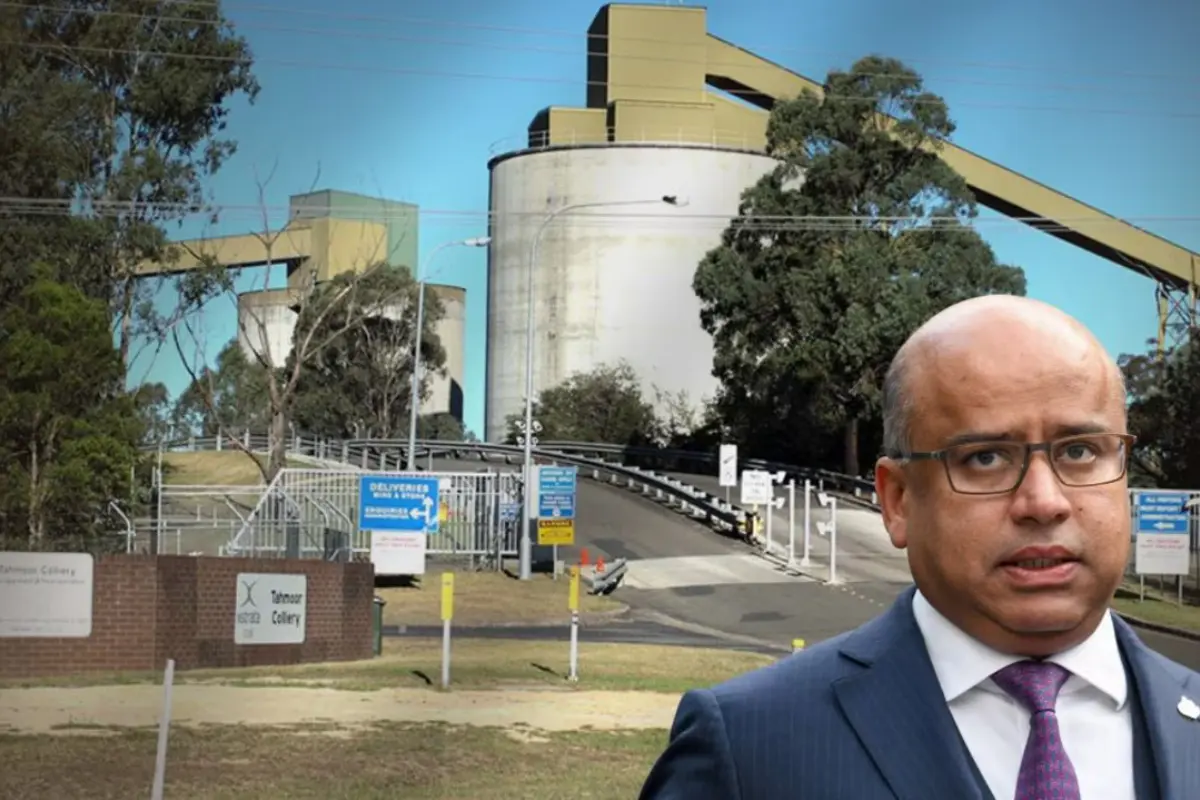

Tahmoor Colliery, an underground coal mine on the outskirts of Bargo in New South Wales, has shifted from being a quiet supplier of coking coal to a national flashpoint in debates about energy transition, corporate debt and the treatment of workers.
The mine, now mothballed, has seen hundreds of labour-hire and contractor workers stood down without pay, as owner SIMEC Mining and its parent GFG Alliance juggle complex refinancing deals and a proposed sale of the asset. At the same time, the Minns Government has approved an extension for Tahmoor South, even as the mine is described as one of the state’s most polluting operations due to its methane emissions.
For communities in Wollondilly and the Southern Highlands, the story of Tahmoor Colliery is now as much about uncertainty and climate risk as it is about coal and steelmaking.
Background and Location of Tahmoor Colliery in NSW
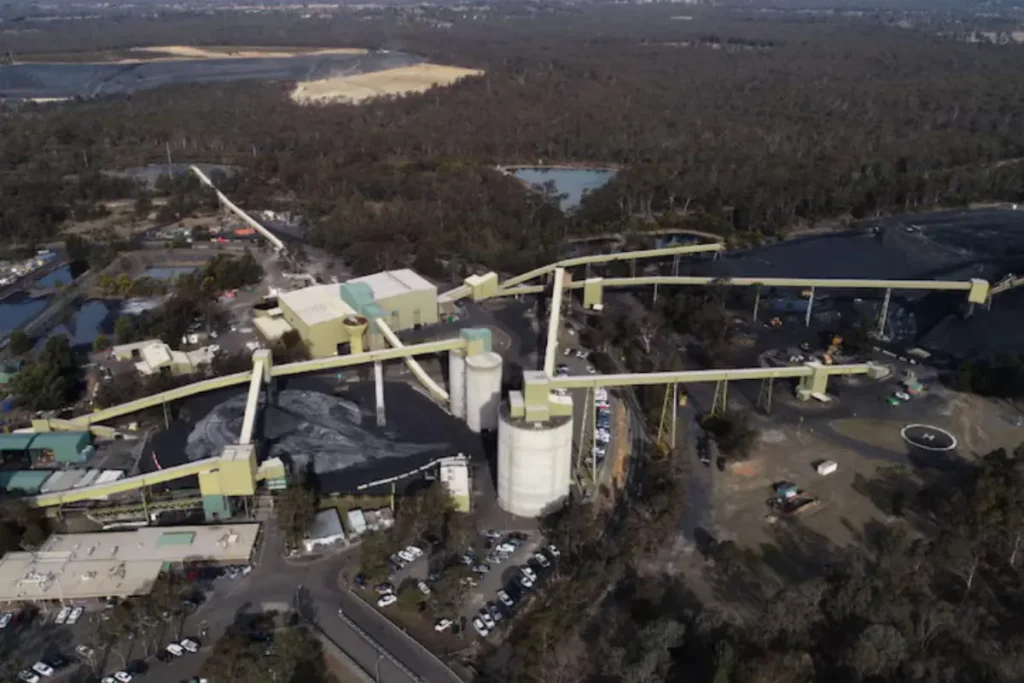
Tahmoor Colliery lies about 95 kilometres south-west of Sydney, near the towns of Bargo and Tahmoor in the Wollondilly Shire. It is an underground longwall mine extracting coal from the Bulli Seam, a geology that runs beneath farmland, bushland and residential areas.
The mine primarily produces metallurgical (coking) coal for steelmaking, with some coal also suitable for power generation. Coal is transported via a dedicated rail balloon loop linking the site to the Main Southern railway line, feeding export terminals such as Port Kembla.
For decades, Tahmoor Colliery has supplied international steel mills and contributed royalties, wages and contracts to the local economy. But the geological advantages of the Bulli Seam come with challenges: high methane content and subsidence risks that have shaped both its safety record and its environmental footprint.
History of Tahmoor Colliery Ownership and Operations
The Tahmoor Colliery story tracks the wider consolidation of Australia’s coal sector.
- Initial development of the colliery began in the late 1970s, with underground workings established to tap the Bulli Seam.
- Over subsequent decades, ownership passed through a series of major coal players, including BP interests, Centennial Coal, Xstrata and Glencore.
In 2018, SIMEC Mining, part of Sanjeev Gupta’s GFG Alliance, acquired Tahmoor from Glencore, rebranding it as Tahmoor Coking Coal. The new owners pitched the mine as a strategic supplier of hard coking coal for Gupta’s Whyalla steel operations and other global customers.
Longwall mining has been central to the operation since the late 1980s, with successive panels extracted under rural properties and near townships. The mine has historically produced around 2–2.5 million tonnes of run-of-mine coal each year, making it a mid-sized but significant contributor to Australia’s metallurgical coal exports.
Planning Approvals and Tahmoor Colliery’s South Expansion
In April 2021, the NSW Independent Planning Commission (IPC) approved the Tahmoor South Coal Project, extending the life of Tahmoor Colliery to 2032 and enabling continued longwall extraction to the south of existing workings. The IPC decision imposed more than 160 conditions covering subsidence, groundwater, noise, air quality and greenhouse gas reporting.
The Environmental Defenders Office later noted that the approval allowed the mine to continue operating for another decade despite substantial concerns raised at public hearings about subsidence and climate impacts.
In May 2025, the Minns Government endorsed a further modification to Tahmoor South’s consent. Advocacy groups say this decision effectively granted another longwall and roughly nine extra months of operations, with lifetime emissions estimated in the millions of tonnes of CO₂-equivalent.
A briefing from one environment group described Tahmoor as the “second most polluting coal mine in NSW”, criticising the lack of best-practice methane abatement requirements in the latest approval.
For local residents, the planning saga has been equally focused on land stability. An e-petition to the NSW Parliament in 2021 argued that the expansion was approved “despite significant valid and real environmental and subsidence concerns” raised by the community.
Emissions Profile of Tahmoor Colliery and Climate Scrutiny
What sets Tahmoor Colliery apart from many other underground mines is its methane intensity.
A submission to a NSW parliamentary inquiry in February 2025 described Tahmoor as a “super-emitting underground coal mine”, noting that it produced an average of 2.4 million tonnes of run-of-mine coal over five years but released far higher levels of methane than the sector average.
Analysis by energy commentators has ranked Tahmoor among the most emissions-intensive coal mines in the country, with estimates that its emissions intensity is around eight times higher than the Australian coal sector average.
RenewEconomy reported in May 2025 that Tahmoor released the equivalent of more than a million tonnes of CO₂ in 2024 before any of its coal was burned, and that the new approval could see a further 11.5 million tonnes of CO₂-equivalent released over coming years.
Climate advocates argue that such figures sit uneasily alongside NSW’s emissions targets. A Climate Council submission in August 2025 noted that six coal mine expansions approved since 2023, including Tahmoor, may collectively generate Scope 3 emissions several times greater than the state’s annual domestic output.
This scrutiny has placed Tahmoor Colliery at the centre of a broader policy question: how long high-emitting mines can continue in a state committed to net-zero goals.
Workforce, Stand-Downs and Union Response at Tahmoor Colliery
For many in the Wollondilly and Southern Highlands region, Tahmoor Colliery is first and foremost an employer. That reality collided sharply with corporate finance in late 2025.
In October 2025, about 250 labour-hire and contractor workers at the mine were stood down without pay after contractor RStar ceased operations on site.
The Mining and Energy Union (MEU) said workers had endured “months of broken promises” from SIMEC Mining and called on Sanjeev Gupta to “pay up or step aside at Tahmoor”.
ABC News reported that more than half the workforce had been affected, leaving families suddenly without income and raising serious questions about the mine’s future.
Local federal MP Angus Taylor issued a public statement saying his first concern was for employees and their families, noting that operations had been scaled back for months and that “GFG needs to be honest about the future of Tahmoor.”
The stand-downs came on top of previous periods where production had been curtailed due to supplier disputes. In early 2025, issues with unpaid bills and logistics providers had already disrupted output, highlighting how exposed Tahmoor Colliery was to wider GFG finances.
GFG Alliance, Debt Deals and the Proposed Sale of Tahmoor Colliery
The financial story behind Tahmoor Colliery is complex and global.
GFG Alliance’s Australian businesses have been under pressure since the collapse of former financier Greensill Capital in 2021. In February 2025, GFG announced an agreement in principle with Greensill creditors that would reduce its overall debt and, critically, flagged an “expedited process” to sell part or all of its equity in Tahmoor Coking Coal. The company said some sale proceeds would be used to shore up liquidity at the Whyalla steelworks and catch up on supplier payments.
Reports at the time suggested an asking price of around A$800 million for Tahmoor Colliery, reflecting its remaining reserves and approvals to 2032.
Subsequent documents released in insolvency proceedings show that Tahmoor had previously loaned hundreds of millions of dollars to related GFG entities such as OneSteel, with that debt later assigned to Liberty Primary Metals Australia (LPMA). That structure left Tahmoor entangled in the administration of LPMA and other GFG businesses.
By late 2025, creditors of LPMA had voted on a deed of company arrangement that gives Sanjeev Gupta-linked entities a pathway to regain control over assets including the mothballed colliery, in exchange for staged payments funded partly by asset sales such as a disused electric arc furnace in South Korea.
One report on the deal noted that Gupta must deliver $1 million by March 2026 to cover administrators and advisers, with prospects for unsecured creditors largely dependent on any future sale price achieved for Tahmoor Colliery.
The result is a mine approved to run until 2032 but stuck in a holding pattern while its owner restructures debt across multiple continents.
Community Concerns and Social Licence of Tahmoor Colliery
Community attitudes towards Tahmoor Colliery combine economic reliance with unease about subsidence and climate risks.
Residents in Bargo and nearby areas have long raised concerns about mining-induced ground movement, pointing to cracked homes, changes in surface water and damage to local infrastructure. These issues were prominent in objections to the Tahmoor South extension, as recorded in public submissions and the e-petition to the NSW Parliament.
Local environment and climate groups have also criticised the Minns Government’s 2025 extension approval. A statement from Lock the Gate Alliance highlighted that Tahmoor is “NSW’s second most polluting coal mine” and argued that approving extra coal extraction in a year marked by severe floods sends the wrong signal on climate responsibility.
Supporters of the mine emphasise its role in sustaining local businesses, clubs and services through wages, contracts and sponsorships, as well as its place in global steel supply chains. Company material stresses community investment and monitoring programs designed to manage impacts.
But with stand-downs, unpaid workers and a mothballed operation, the mine’s social licence increasingly depends on whether future owners can provide secure jobs while meaningfully reducing methane emissions.
Tahmoor Colliery, Steelmaking and the Energy Transition
A key justification for Tahmoor Colliery has been its connection to steelmaking. Hard coking coal from the mine has been used by blast furnaces, including those operated from Whyalla, and blended into export cargoes for international steel mills.
GFG has promoted plans to transition Whyalla towards lower-emissions steelmaking through electric arc furnaces and greater use of scrap and renewables. If those plans proceed, long-term demand for coking coal could decline, even as near-term volumes remain important.
This raises a strategic question for policymakers: should emissions-intensive mines like Tahmoor continue at current output levels through the 2030s, or should production step down in line with climate targets and emerging low-carbon steel technologies?
Legal developments add another layer of uncertainty. In 2025, the NSW Court of Appeal overturned approval for a separate coal expansion at Mount Pleasant, finding that regulators had failed to properly assess downstream emissions. While that case does not directly involve Tahmoor, lawyers say it signals tougher scrutiny for future coal projects and potential revisions to how Scope 3 emissions are weighed.
Future Scenarios for Tahmoor Colliery in NSW
With Tahmoor Colliery currently idle, several possible pathways are being discussed by unions, local leaders and climate advocates:
1. Restart under New or Existing Ownership
If GFG completes a sale or secures fresh capital, the mine could restart longwall operations in the Tahmoor South domain and run through its current approvals to 2032. That outcome would restore jobs and supplier contracts but extend the mine’s methane and Scope 3 emissions contribution.
2. Extended Care and Maintenance
Another possibility is that Tahmoor Colliery remains on care and maintenance for an extended period while debt restructuring continues and potential buyers assess the asset. In that case, the region faces a drawn-out employment problem, with growing demands for transition planning and alternative industries.
3. Policy-Driven Tightening or Early Closure
As climate policy evolves and emissions budgets tighten, governments could place stricter conditions on high-emitting mines. Enhanced methane abatement requirements, limits on additional longwalls, or financial constraints through climate-related disclosure rules could shorten the mine’s practical life, even if formal approvals run to 2032.
Across all scenarios, the central issue is fairness: how to balance obligations to workers and local communities with the global need to cut emissions from coal.
Why Tahmoor Colliery Now Matters Beyond Wollondilly
For search users and readers following Tahmoor Colliery, the mine has become a case study in the collision of three forces:
- Regional jobs and economic continuity – hundreds of workers and host communities depend on the mine’s payroll, yet many have now experienced sudden stand-downs and unpaid periods.
- Corporate debt and opaque structures – complex financing arrangements within GFG and related entities have left the mine entangled in global insolvency deals and creditor negotiations.
- Climate limits and emissions intensity – Tahmoor’s methane profile places it under sharper climate scrutiny than many peers, at a time when governments are expected to align decisions with net-zero pathways.
Whether the mine restarts, is sold, or gradually winds down, the outcome will be watched closely by coal communities, unions, investors and climate advocates across Australia.
Tahmoor’s future will help answer a bigger question: how a country built on resource exports manages the decline of some of its most carbon-intensive assets without abandoning the workers and towns that powered them.




Leave a Reply