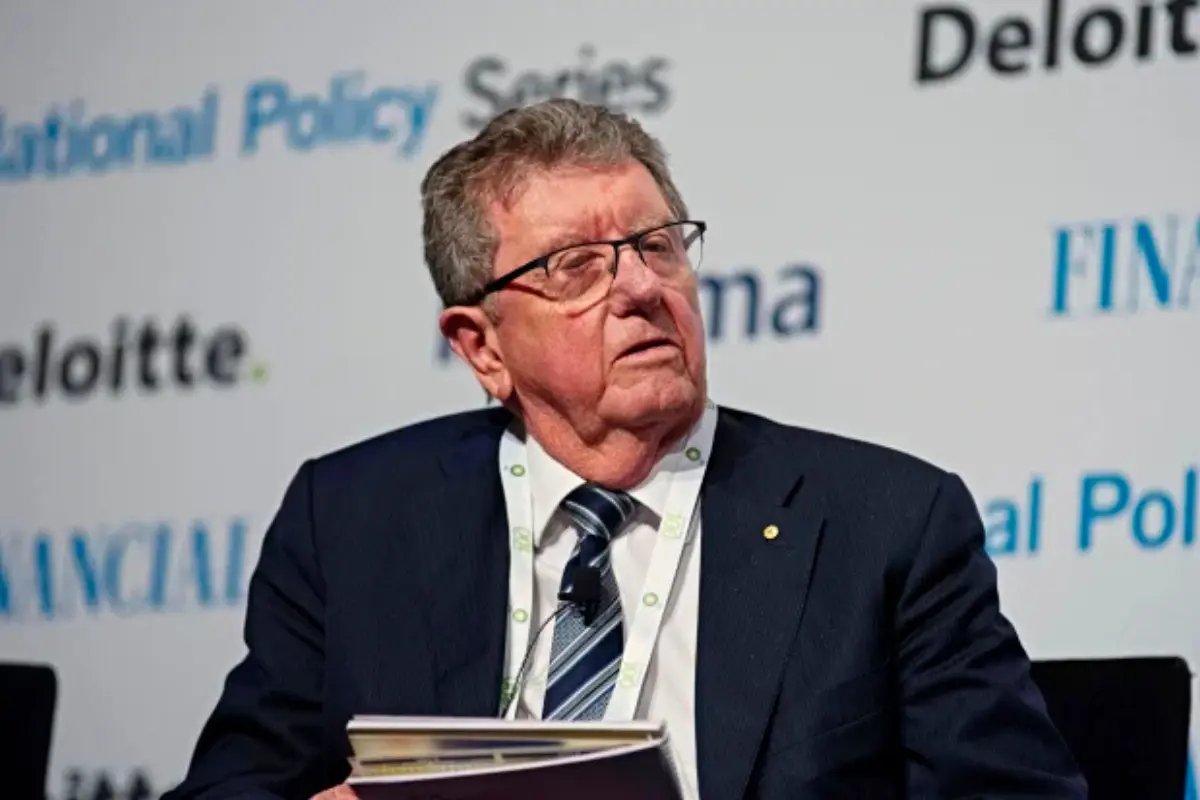

This article explores the journey of Trevor St Baker as a long-standing force in the Australian electricity sector, highlighting his influence across energy innovation, battery manufacturing, electric vehicles, renewable energy, and nuclear power debates. It examines how business strategy, public policy, and infrastructure development intersect through his work, while also addressing his philanthropy, political influence, and industry leadership. The piece presents a grounded, experience-based perspective on how energy transitions work in reality rather than theory.
Introduction
Trevor St Baker has built a reputation grounded in long-term thinking within the Australian electricity sector, where decisions often shape markets for decades rather than years. His involvement across coal, gas, renewables, battery technology, and nuclear power reflects a practical understanding of how energy systems evolve under economic and political pressure. Instead of following trends, his approach often aligns with infrastructure durability, grid stability, and scalable innovation.
The energy industry rarely rewards short-term thinking, and this reality explains why energy innovation plays a central role in his work. From early exposure to power stations and energy departments to large-scale investments in electric vehicle infrastructure, each step connects to reliability and supply continuity. That perspective resonates with professionals who understand how fragile energy transitions can become without planning.
Having observed market cycles firsthand, he approaches decarbonisation with caution rather than idealism. Policy shifts, public opinion, and capital constraints demand balanced solutions rather than single-technology bets. This mindset frames his presence across renewable, nuclear, and transitional energy discussions.
Energy Innovation and Battery Manufacturing Vision
Through the St Baker Energy Innovation Fund, investment focuses on tangible assets rather than speculative concepts. The development of battery factories in New Clark City, Philippines, represents a calculated move into regional manufacturing with global relevance. The $10 million project initially targets 600MWh, with long-term scaling toward 2GWh capacity.
Battery production centres on lithium iron phosphate batteries, chosen for safety, durability, and suitability for grid and transport applications. These batteries support energy storage needs across Australia, the United States, and the ASEAN region, linking local manufacturing to international demand. The strategy aligns with supply chain resilience rather than dependence on a single market.
Formal support through memoranda of understanding and oversight involving Ferdinand Marcos Jr underscores government confidence in the project. The StB Gigafactory positions itself within the global battery industry, contributing to high value jobs and technical skill development. Long-term timelines reflect patience rather than rushed execution.
Scaling Production and Market Integration
Initial production runs between May and August, followed by full commercial output by October 2024, demonstrate structured rollout planning. This phased approach allows quality control, workforce training, and supply chain alignment before full-scale operations. Such discipline reduces operational risk during expansion.
The ambition to reach 2GWh within six years reflects confidence in regional demand and policy alignment. Battery-backed energy storage increasingly supports both grid stability and electric transport. This integration highlights why manufacturing capacity matters as much as generation assets.
By serving multiple regions, the project avoids overexposure to a single regulatory environment. Export flexibility also supports currency resilience and diversified revenue streams. These fundamentals often separate durable infrastructure projects from short-lived initiatives.
Electric Vehicles and Charging Infrastructure Expansion
The push into electric vehicles prioritises infrastructure readiness rather than consumer hype. Through Pure EV, feasibility studies address zero carbon transport systems grounded in real-world conditions. Collaboration with the Bases Conversion and Development Authority (BCDA) supports structured planning.
EV deployment depends on reliable fast charging infrastructure, especially for electric vehicle public transport. Technical and commercial assessments ensure systems match usage patterns and urban density. This focus prevents underutilised or poorly located assets.
On a broader scale, Evie Networks extends EV fast-charging stations from Cairns to South Australia, reducing range anxiety across long distances. In parallel, leadership at Tritium reinforces manufacturing capability at a global level. These initiatives reflect a full ecosystem approach rather than isolated projects.
Electric Transport as a System, Not a Product
Electric transport succeeds only when vehicles, charging, and energy supply align. The emphasis on public transport illustrates awareness that private vehicle adoption alone cannot decarbonise cities. Integrated systems deliver greater emissions reduction per dollar invested.
Charging infrastructure also supports grid optimisation through managed demand. Smart deployment reduces peak strain while increasing utilisation rates. These benefits often go unnoticed outside technical circles.
By linking EV infrastructure with battery manufacturing, the strategy connects storage with consumption. This closed-loop thinking strengthens long-term viability across sectors.

Renewable Energy and Solar Integration
Renewable expansion continues through Energy DeCarb, focusing on practical solar deployment rather than symbolic installations. Feasibility studies examine rooftop solar panels across factory roofs and stadium structures in New Clark City. These surfaces provide scale without competing for land.
Pairing solar generation with battery-backed solar systems improves reliability and dispatchability. Stored energy supports evening demand and stabilises intermittent output. This integration strengthens renewable energy infrastructure.
Such projects serve as demonstrations rather than experiments. Proven models encourage replication across industrial zones. That scalability defines meaningful renewable progress.
Nuclear Energy Advocacy and Policy Debate
Within energy policy circles, nuclear power remains a contentious yet persistent topic. Advocacy for CO2 reduction often includes discussion of Small Modular Reactors (SMRs) as a low-emission baseload power source. These arguments focus on reliability rather than ideological alignment.
Concerns around intermittent renewables highlight the need for synchronous generation within electricity supply grids. Grid operators understand the technical challenges of maintaining frequency and stability. Nuclear proposals often address these operational realities.
Political debate links nuclear discussion to AUKUS, ANSTO, Murdoch media, and figures like Matt Canavan, Barnaby Joyce, and Angus Taylor. Events such as COP26 amplify these conversations. Policy complexity ensures slow, contested progress.
Business Career and Energy Market Leadership
Early work in Queensland and New South Wales public service provided exposure to energy departments, regulatory frameworks, and operational realities. Experience with power stations and deregulation built technical literacy uncommon among private investors. This foundation influenced later decisions.
The establishment of ERM Consultants Pty Ltd marked a shift into private-sector advisory roles. Founding ERM Power Pty Ltd, later renamed Sunset Power, led to becoming Australia’s largest energy retailer. Expansion into the United States demonstrated international ambition.
The Shell acquisition validated business value while retaining leadership through Non-Executive Director and Deputy Chairman roles. These positions maintained influence without daily operational burden. Strategic distance often enhances long-term oversight.
Strategic Assets and Market Timing
The purchase of Vales Point Power Station for $1 million surprised many industry observers. Achieving $100 million profit within five years highlighted market timing rather than luck. Asset longevity often defies pessimistic forecasts.
Ownership of gas-fired power stations supports grid flexibility during renewable transitions. Gas assets complement intermittent generation while reducing coal reliance. This role positions gas as a transitional rather than permanent solution.
Involvement in the LNG sector further diversified exposure. Such diversification cushions regulatory and commodity price volatility. Resilience remains a recurring theme.
Political and Industry Influence
Leadership within the National Generators Forum provided insight into producer priorities and regulatory negotiation. Roles at the Queensland Resources Council and Energy Policy Institute of Australia (EPI) extended influence across policy discussions. These organisations shape narratives around energy security.
The St Baker Family Trust contributed $323,000 in political donations to both the Queensland LNP and Australian Labor Party (ALP). Bipartisan engagement reflects pragmatic rather than ideological alignment. Influence often depends on access rather than allegiance.
Such involvement attracts scrutiny, yet it remains common among major infrastructure stakeholders. Energy policy rarely develops in isolation. Engagement ensures perspectives enter legislative processes.
Awards, Recognition, and Philanthropy
Formal recognition includes Officer of the Order of Australia (2016) and an honorary Doctor of Engineering from the University of Queensland. Academic leaders such as Professor Vicki Chen highlighted contributions to energy security, innovation, and job creation. These honours acknowledge sustained impact.
Philanthropy extends beyond energy into skin cancer research, Indigenous education, technology, and the arts. Alongside Judith St Baker, support focuses on long-term societal benefit rather than visibility. Quiet contribution often delivers deeper outcomes.
Such efforts reinforce a broader definition of leadership. Infrastructure shapes economies, but philanthropy shapes communities. Both roles matter.
Public Statements and Industry Perspective
Public commentary frequently references a global shift in energy technology requiring balanced responses. Acknowledging management challenges alongside opportunity reflects industry realism. Progress demands coordination rather than confrontation.
Emphasis on manufacturing, infrastructure development, and measured industry disruption contrasts with speculative enthusiasm. Execution matters more than slogans. This perspective resonates with experienced operators.
Consistency across statements builds credibility. Markets respond to predictability. Trust grows through delivery.
Personal Industry Insight
Years of observing energy markets reveal that transitions succeed through overlap rather than replacement. Renewables, nuclear, gas, and batteries must coexist during change. This reality often escapes simplified debate.
Infrastructure longevity demands patience and adaptability. Strategic investors survive cycles by anticipating constraints rather than resisting them. Experience shapes foresight.
That balance explains continued relevance across decades. Energy evolution rewards realism.
FAQs
What is Trevor St Baker known for?
Leadership across energy retailing, power generation, renewable investments, battery technology, and EV infrastructure defines his profile. Strategic use of an innovation fund bridges research with deployment.
Does Trevor St Baker support nuclear energy?
Yes, advocacy includes nuclear advocacy, SMRs, and a decarbonisation strategy for Australia. Focus remains on reliable baseload electricity.
What companies is Trevor St Baker associated with?
Associations include ERM Power, Sunset Power, Evie Networks, Tritium, Delta Electricity, and the St Baker Energy Innovation Fund.
Has Trevor St Baker received any awards?
Recognition includes the Officer of the Order of Australia and an honorary doctorate from the University of Queensland for engineering recognition.



Leave a Reply