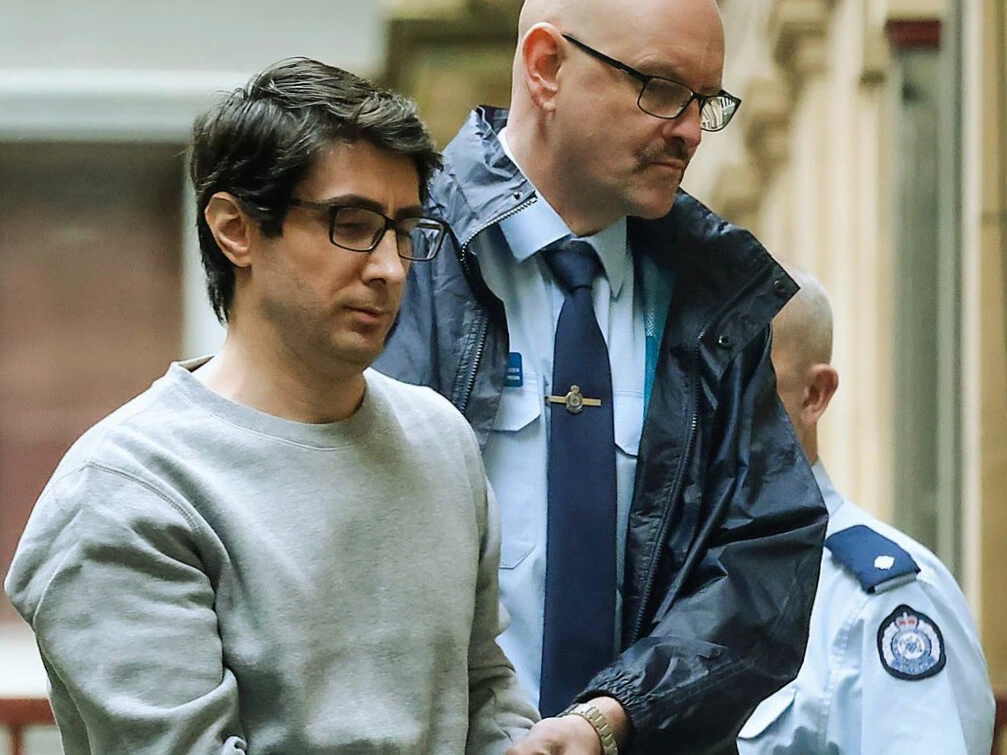

The case of Luay Sako, detailing his long period of stalking, the murder of Celeste Manno, the court’s findings, and the 36-year sentence imposed on him. It highlights his psychological profile, the failures of intervention systems, and the broader impact his actions had on public debate around stalking, mental-health defences, and justice reform in Victoria.
Introduction to the Case of Luay Sako
The name Luay Sako has become linked to one of Victoria’s most disturbing stalking-related murders. The killing of 23-year-old Celeste Manno in 2020 shook the community, fuelled public anger, and sparked renewed questions about how the justice system handles stalking, intervention orders, and mental-health defences. When the Supreme Court of Victoria handed down its verdict in early 2024, it revealed a detailed picture of Sako’s behaviour, mindset, and fixation on his victim.
This long-form analysis explores the full story of Luay Sako — his background, the escalation of harassment, the night of the murder, the legal arguments, his psychological profile, the family response, the sentencing, and the aftermath. By focusing each section on “Luay Sako”, this blog provides a structured, search-centred lens on the case while maintaining Australian English conventions and avoiding repetitive or typical wording.
Who Is Luay Sako? The Background of the Offender
Before the events that led to his arrest and imprisonment, Luay Sako was a former call-centre worker living in Melbourne’s northern suburbs. He worked with Celeste Manno at a workplace where he struggled with performance issues and was eventually dismissed. Following his termination, he developed an unhealthy fixation on Ms Manno. What started as mild admiration quickly transformed into obsessive behaviour.
According to courtroom discussions, Sako was described by a forensic psychiatrist as “completely self-absorbed and egocentric”. Another expert said, “I rated him as extreme on his lack of empathy.” These descriptions reflected concerns about his emotional functioning long before the violence that unfolded.
He created multiple social-media accounts to contact Ms Manno after she blocked him. He sought sympathy and validation, but when this was not provided, his behaviour escalated into an intense harassment campaign. A psychiatrist gave evidence that Sako “wanted to get sympathy and he didn’t want to be seen as a monster,” suggesting he had significant concerns with how others perceived him.
The early profile of Luay Sako therefore presented a portrait of a man struggling with identity, responsibility, and ego — a dangerous mix that later fuelled a violent crime.
The Stalking Behaviour of Luay Sako & Early Warning Signs
Understanding the escalation of Luay Sako’s behaviour is essential. For nearly 18 months leading up to the murder, Sako engaged in persistent cyber-harassment of Celeste Manno. He created new accounts when blocked, sent inappropriate messages, and attempted to draw her attention through any online means available.
Ms Manno took the appropriate step of obtaining an intervention order. However, Sako ignored it. Despite the legal restriction, the harassment continued. One of the most concerning aspects of this period was how easily he bypassed boundaries. More than once, it was noted that Sako made deliberate attempts to circumvent online blocks by creating fresh accounts.
A turning point was triggered when Ms Manno shared a photograph with her new boyfriend on social media. According to the summary read in court, this was a major emotional driver behind Sako’s next actions. The fixation deepened, and he shifted from online harassment to planning a violent confrontation.
Experts later analysed this behaviour as a classic example of obsessive stalking that escalates when the victim enters a new relationship. The case of Luay Sako highlighted how intervention orders, while vital, are only as effective as the offender’s willingness to comply — something Sako never intended to do.

The Murder Committed by Luay Sako-What Happened That Night
On 16 November 2020, at around 3:38am, Luay Sako climbed over the fence of the Manno family home in Mernda. He smashed a bedroom window with a hammer to gain entry. Celeste, who had been asleep, was startled awake by the break-in. Inside the bedroom, Sako stabbed her repeatedly using a kitchen knife, delivering 23 fatal wounds.
In sentencing remarks, Justice Jane Dixon stated:
“After attacking Celeste, you dropped the knife on the bedroom floor and left via a window. You carried out the attack with chilling efficiency.”
The brutality of Sako’s actions demonstrated clear intent. The court described the act as deliberate, persistent, and planned. Cell-site evidence and earlier online behaviour supported the conclusion that he had been fixating on her for months.
Celeste’s mother, Aggie Di Mauro, who discovered her daughter moments after the attack, gave an emotional victim-impact statement. Following the sentencing, she said:
“It’s outrageous, absolutely unbelievable, that the court decided to grant him mercy even though he showed Celeste none.”
Her response reflected the deep anguish felt by the family — and the broader community — toward the crime and its aftermath.
Legal Proceedings & Sentencing of Luay Sako
In early 2024, Luay Sako pleaded guilty to murder. This avoided what would have been an extended trial and allowed the court to move directly to sentencing submissions. Justice Dixon delivered the final sentence: 36 years in prison, with a non-parole period of 30 years.
Although Sako’s legal team argued mental impairment, the court found he understood “the difference between right and wrong”. The judge acknowledged his diagnoses — major depressive disorder, body dysmorphia, and personality disorder — but concluded they did not amount to full mental impairment under Victorian law.
During the hearing, one psychiatrist stated:
“During an assessment, Sako was exaggerating and he was trying to persuade me that he had a mental impairment defence.”
This call into question his credibility, sincerity, and mental-health claims.
The victim’s family expressed disappointment with the sentence. Celeste’s mother said:
“That little trust that I had left in this system has been completely destroyed by today’s outcome.”
She later added:
“At this point I can only pray that the DPP and the Court of Appeal recognise that true justice in this case demands a life sentence.”
The sentencing of Luay Sako therefore became more than a legal decision — it became a point of public debate about justice, deterrence, and the value placed on victims of stalking.
The Mental-Health Profile of Luay Sako
The psychological analysis of Luay Sako became central to his defence and later to the public’s understanding of the case. Several forensic psychiatrists examined him. Their findings were striking.
One expert stated that Sako displayed an exaggerated presentation of symptoms:
“He was exaggerating and he was trying to persuade me that he had a mental impairment defence.”
Another psychiatrist described him as:
“Completely self-absorbed and egocentric.”
That same specialist added:
“I rated him as extreme on his lack of empathy.”
These quotes provided insight into both his mindset and his behaviour. The court heard that while Sako had genuine mental-health issues, he also manipulated them to soften his legal responsibility.
Justice Dixon highlighted that Sako made “spurious and absurd statements” during interviews, pointing to a pattern of dishonesty and an attempt to reduce accountability.
His psychiatric profile ultimately did not excuse his actions. It added context but not justification, reinforcing the legal principle that mental illness does not automatically diminish criminal responsibility.
Stalking Laws, Intervention Orders & System Gaps Highlighted by Luay Sako
The tragedy involving Luay Sako sparked renewed calls for reform to Victoria’s stalking laws. Although Ms Manno had an intervention order, the system failed to protect her. Intervention orders are important tools, but without proactive monitoring, determined offenders can ignore them.
Sako’s ability to:
- Create multiple online accounts
- Continue harassment despite legal restrictions
- Monitor Ms Manno online
- Approach her home unnoticed
…illustrated several weaknesses in the existing framework.
Advocates have argued that intervention orders need stronger enforcement mechanisms, particularly in cases involving online stalking. Some professionals noted that intervention orders must be paired with risk-assessment tools to identify when offenders pose an escalation risk.
The case of Luay Sako demonstrates that stalking is rarely static. It often escalates in frequency and severity, especially when the victim moves on or enters a new relationship. Without stronger preventative strategies, intervention orders alone may not stop a determined offender.

Victim Impact and Public Reaction to the Actions of Luay Sako
The community response to Luay Sako and the murder of Celeste Manno was one of shock and heartbreak. The crime gained widespread attention because it represented one of the darkest outcomes of stalking — a young woman murdered in her home by a man who refused to accept rejection.
After the sentencing, Celeste’s mother expressed her devastation through powerful statements. She said:
“Quite clearly, his right to mercy was more important than her right to life.”
The family also vowed to fight to ensure Sako remains behind bars for as long as possible.
Public discussions highlighted several themes:
- How stalking laws should be strengthened
- How victims can be protected sooner
- How mental-health claims should be assessed
- How sentences reflect the severity of gendered violence
The name Luay Sako became symbolic in discussions about stalking and homicide in Australia.
FOR MORE RELATED ARTICLES VISIT US AT AUSTRALIANMAGAZINE.COM.AU



Leave a Reply