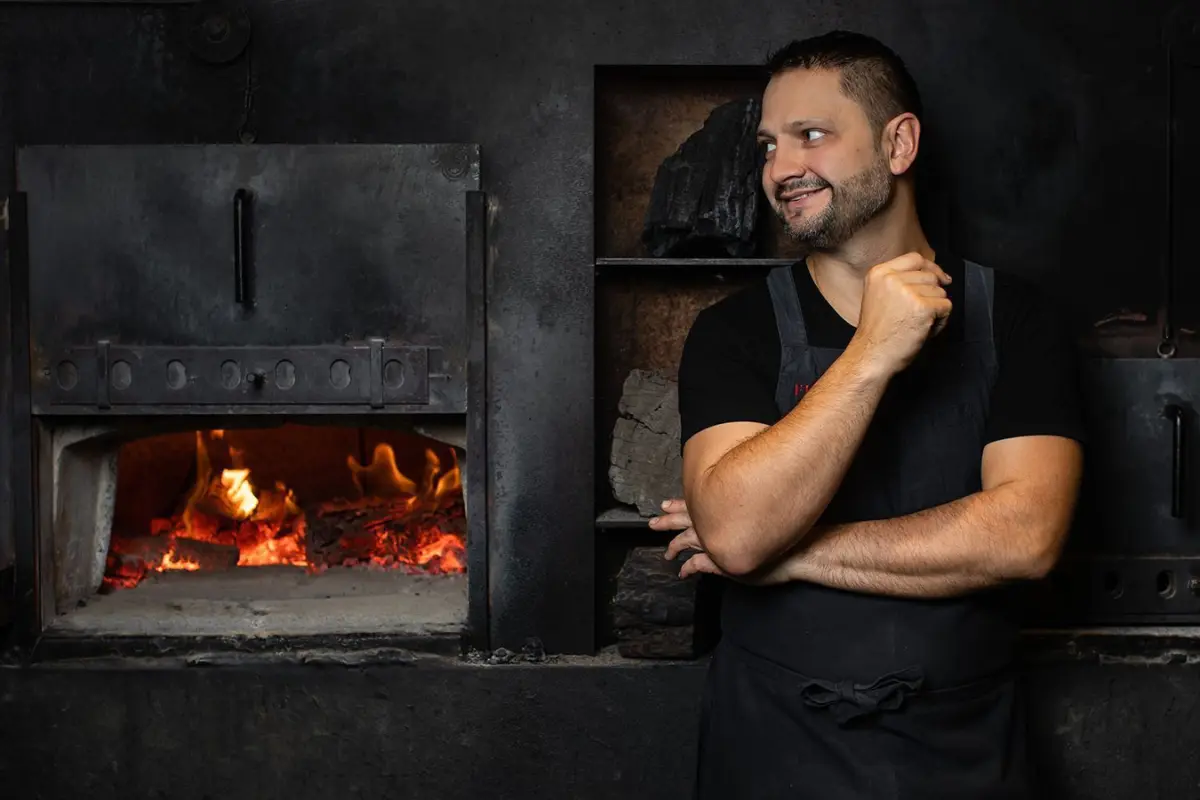

Lennox Hastie built his identity as an executive chef through a deep respect for fire, ingredients, and discipline rather than trends or spectacle. His Sydney restaurant Firedoor operates using live fire, no gas, and no electricity, making the cooking process both demanding and honest. This approach reflects years spent refining technique across Michelin-starred kitchens in the UK, Spain, and Australia.
Rather than treating fire as performance, he treats it as a living tool that requires attention and restraint. The focus remains on elemental cooking, where wood, heat, and timing work together to highlight natural flavour. That philosophy continues to shape how guests experience modern Australian dining today.
Fire-led cooking forces clarity because nothing hides behind technology or shortcuts. Each movement near the flame carries purpose and responsibility. This mindset defines how Firedoor operates daily.
Career Journey Shaped by Spain and the Basque Country
Before returning home, Lennox Hastie trained extensively across Michelin-starred kitchens, gaining discipline and perspective. His five-year stint at Asador Etxebarri in the Basque Country reshaped how he understood fire and restraint. There, cooking relied on patience rather than pressure.
In San Sebastian, he absorbed a strong food culture rooted in respect for ingredients and producers. Fire never acted as decoration but as a precise tool controlled through experience. This period taught him that consistency defines true craft.
In 2004, he arrived as a young chef seeking work, not recognition. He left with a clear understanding of elemental cooking and its emotional weight. That experience later influenced every decision behind Firedoor.
Returning to Australia and Opening Firedoor
After years abroad, Lennox Hastie returned to Australia with a refined but grounded vision. He partnered with Leon Fink to open Firedoor in Sydney in 2015. The restaurant rejected conventional systems and committed fully to wood fire.
Early success came through clarity rather than compromise. The kitchen focused on ingredients, produce arrival, and daily adaptability. That commitment earned two hats and recognition as SMH Good Food Guide Restaurant of the Year 2023.
By 2024, he took full ownership, reinforcing long-term control and responsibility. Sole ownership allowed sharper decisions around culture and sustainability. The restaurant matured without losing its core philosophy.
Firedoor Philosophy and Live-Fire Discipline
At Firedoor, the daily menu begins only after produce arrival. Fishermen, farmers, and growers influence each service through availability and quality. This system protects freshness, integrity, and seasonal balance.
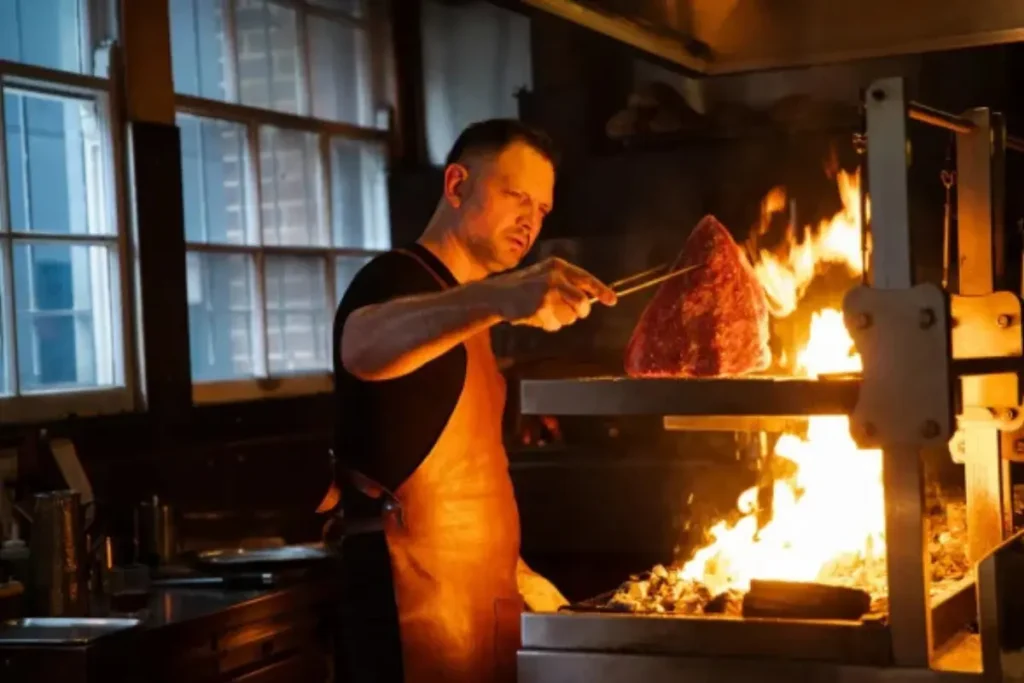
Guests observe the open kitchen, where custom grills, embers, and heat zones shape each dish. Cooks adjust distance and timing rather than relying on fixed temperatures. The result highlights flavour and texture with precision.
This environment demands focus because fire never pauses. Every second matters when cooking with live fire. That discipline defines the restaurant’s rhythm.
Wood Selection and Fire Control
Each type of wood plays a specific role in shaping taste. Applewood supports delicate shellfish, while ironbark strengthens red meat through deeper heat. These choices influence smoke, timing, and aroma.
Fire behaves differently depending on density and burn rate. The kitchen studies how embers shift across a service. Mastery comes through repetition, not instinct alone.
This control transforms cooking into a repeatable craft. Fire becomes predictable through respect rather than force. Precision replaces excess.
Ingredients at the Centre of Every Decision
Ingredients sit at the heart of every plate served at Firedoor. The team speaks directly with fishermen, farmers, and foragers each morning. If quality falls short, the ingredient stays off the menu.
This honesty builds trust across the supply chain. Producers feel respected rather than exploited. Guests sense that transparency through flavour.
Nothing appears by obligation or expectation. Every dish earns its place. That discipline defines consistency.
Sustainability as Daily Practice
Sustainability exists as action, not branding. The restaurant manages Australian hardwoods, waste management, and ash management with the same care given to proteins. Buying to the day limits spoilage.
This method supports a healthy environment without sacrificing quality. It respects the work of growers and the land itself. Sustainability becomes essential, not optional.
Seasonal restraint protects long-term resources. It also improves cooking clarity. Less choice creates stronger decisions.
Seasonality and Natural Rhythm
Menus follow seasonality rather than preference. Coastal herbs, line-caught fish, and regional vegetables appear only at peak condition. When seasons shift, dishes disappear.
This rhythm keeps the kitchen alert. Cooks respond rather than repeat. Creativity grows from limitation.
Guests experience change naturally. Each visit reflects a moment in time. That connection deepens trust.
Gildas and the Basque Thread
Gildas opened in Surry Hills as a more relaxed expression of Basque influence. The wine bar takes its name from the classic skewer of anchovy, olive, and guindilla pepper. Balance defines every bite.
The combination delivers salt, umami, brine, heat, and acidity, lifted with preserved lemon. Snacks encourage sharing and conversation. Wine supports flavour rather than dominance.
This space promotes drop-in culture. Guests arrive casually and stay naturally. Simplicity drives satisfaction.
Firedoor Philosophy in a Social Setting
Gildas carries the same philosophy as Firedoor but with lighter energy. The focus remains on small bites, wine pairing, and human connection. Nothing feels rushed or forced.
This environment encourages dialogue. Food becomes a bridge rather than a statement. That atmosphere reflects Basque hospitality.
The bar strengthens community engagement. It welcomes spontaneity. That balance supports longevity.
Eating In and Personal Kitchen Habits
At home, Lennox Hastie prefers grilled fish, often barramundi with oil, lemon, and a simple salad. He values clarity over complexity. These habits mirror professional discipline.
He admits a guilty pleasure for cold custard. This honesty humanises his relationship with food. Pleasure and restraint coexist.
His kitchen wisdom remains direct. He believes chefs should cook what they want to eat. Authenticity begins there.
Supporting Local Dining Culture
When dining out, he supports family-run restaurants like Sang by Mabasa. These places reflect care and generational commitment. Community matters more than hype.
Local favourites include AP Bakery and Bar Copains. He appreciates craft, balance, and consistency. Simplicity earns loyalty.
Quick meals matter too. Fang Dumpling House delivers comfort without compromise. Good food exists at every level.
Melbourne and Australian Favourites
In Melbourne, he visits Napier Quarter, Embla, and Caretaker’s Cottage. These venues respect ingredients and atmosphere equally. Each delivers identity without noise.
Coffee remains essential, with Market Lane Coffee a frequent stop. Precision extends beyond food. Quality defines experience.
A long lunch at Tedesca Osteria in Red Hill stands out. Fire, produce, and rhythm align naturally. That memory lingers.
Global Influence and Spain’s Lasting Impact
Globally, San Sebastian remains his favourite food city. The region balances tradition and creativity seamlessly. Respect anchors innovation.
Venues like Elkano showcase fire with discipline. Bar Nestor and Casa Camara reflect ingredient-first cooking. Seafood, timing, and restraint dominate.
This influence continues shaping his work. Spain remains a reference point. The lessons endure.
Media Attention and Industry Pressure
After Chef’s Table on Netflix, attention intensified. Expectations rose alongside scrutiny. He resisted expansion for stability.
Rising costs and labour shortages challenge Australian hospitality daily. Fire-led kitchens demand physical endurance. Training becomes essential.
His response prioritises longevity. Craft must sustain pressure. Growth must follow purpose.
Training, Culture, and Transparency
Investment in training investment strengthens team resilience. Fire cooking requires trust and repetition. Culture supports endurance.
The kitchen values transparency. Guests see the fire and hear producer stories. That honesty builds understanding.
Direct food earns respect. Precision creates value. Experience justifies cost.
Fire, Future, and Focus
Fire cooking remains central to his future. He believes the element can feel refined and beautiful. Discipline transforms perception.
He teaches young chefs to protect their core idea. A strong foundation outlasts trends. Care builds careers.
The future favours clarity. Fire connects people to food. That belief guides everything.



Leave a Reply