

The story of rajwinder singh traces his life, his movements between Australia and India, the investigation that linked him to a major Queensland case, and his eventual extradition. The blog explores his background, legal journey, community impact and the ongoing search for justice surrounding one of Australia’s most widely discussed incidents.
Introduction-Why the Name “rajwinder singh” Matters in Australia
The name rajwinder singh has become one of the most widely discussed in recent Australian news. It is a name tied to a major criminal investigation, international legal negotiations, emotional community reactions and a long journey involving two countries. For many Australians, hearing the name instantly recalls the tragic death of a young woman in Far North Queensland and the years-long search for the man accused of being involved.
This blog explores the full story of rajwinder singh — his background, the timeline of events, the extradition process, the reactions from authorities and the community, the public statements he made, and what the case means for Australia today. The aim is to provide clarity, accuracy and depth, without speculation or unnecessary sensationalism.
Early Life & Background of rajwinder singh
The story of rajwinder singh begins long before headlines and courtrooms. He was born in India and later moved to Australia, where he built a life with his family. Reports indicate that he held Australian citizenship and lived with his wife and children during his time here. Like many members of the Indian-Australian community, he divided his time between Australia and India, maintaining cultural and family connections in both countries.
This dual-life background is important because it later played a role in the international nature of the legal process. People who live transnationally often feel anchored in more than one place, and in the case of rajwinder singh, these cross-border ties would eventually shape a major police investigation and extradition request.
The Day That Changed Everything-Events Surrounding the Cordingley Case
The public first encountered the name rajwinder singh in connection with the tragic death of a young woman in Far North Queensland in 2018. What began as a missing-persons report quickly turned into one of the most heavily investigated homicide cases the region had ever seen.
After the victim’s body was found on a beach north of Cairns, police launched a large-scale investigation involving forensic analysis, phone-tracking, witness interviews, and searches of multiple locations. As the investigation progressed, attention increasingly focused on one individual — rajwinder singh — who had travelled to India the day after the incident.
This sudden departure raised questions, especially when investigators began linking movements, phone data and forensic findings to him. It became clear that the case was shifting from a local tragedy to an international legal pursuit.
Initial Statements from rajwinder singh
When the case began gaining international attention, rajwinder singh made several statements that were later repeated widely in Australian media. Among them were two lines that stood out:
- “I want to go back. It is the judicial system here that has been holding things up.”
- “I did not kill the woman.”
These comments revealed two things — first, that he openly stated a willingness to return to Australia, and second, that he denied involvement in the death.
From that point onwards, the legal battle surrounding rajwinder singh became heavily anchored in both Australian and Indian judicial systems.
Why the Case of rajwinder singh Became International
The departure of rajwinder singh to India immediately following the incident placed the investigation in a difficult position. Local police could no longer question him directly, gather evidence through standard channels, or control his movements. Instead, they were required to work with India’s legal system, which has different procedures, timelines and extradition protocols.
This created three major challenges:
1. Extradition laws
Australia and India have an extradition arrangement, but every case must still pass through multiple layers of legal approval.
2. Court reviews
Indian courts needed to assess whether the evidence presented by Australian authorities met the required threshold for extradition.
3. Political & diplomatic cooperation
Extradition cases are never handled solely by police. They involve government departments, foreign affairs channels, liaison officers, and at times, political discussions.
Despite these challenges, authorities in both countries worked together for years. The case of rajwinder singh became a symbol of how globalised law enforcement must operate when investigations cross borders.
The Turning Point-Arrest of rajwinder singh in India
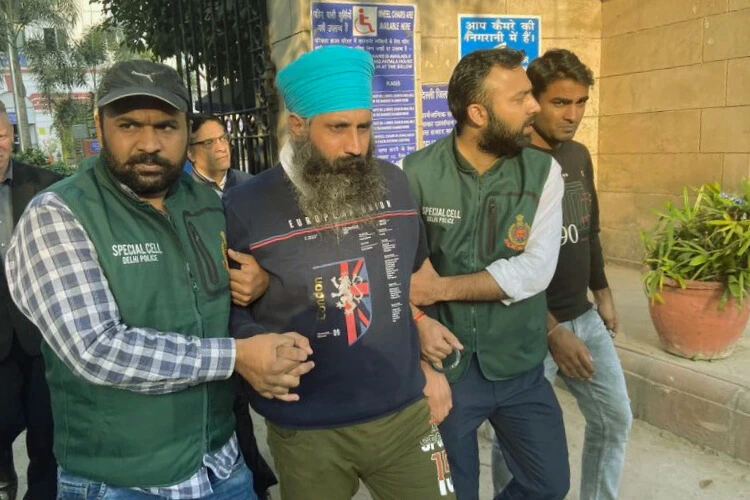
After years of negotiations, legal filings and diplomatic communications, authorities in India eventually located and arrested rajwinder singh. This was seen as a major breakthrough for Australian investigators, who had invested significant time and resources into the search.
The arrest did not immediately guarantee extradition, but it allowed the process to move forward formally. Authorities prepared documentation, presented case materials and argued for extradition in court. Each stage brought the case closer to Australian jurisdiction, but also came with procedural delays.
Nevertheless, the arrest marked a major shift. For the first time since his departure, rajwinder singh was back within a legal process linked to the Australian investigation.
Extradition to Australia-The Return of rajwinder singh
Eventually, rajwinder singh was escorted onto a flight and returned to Australia, where he was taken into custody. His arrival was watched closely by media, police and the public, marking a long-awaited step forward for the victim’s family and community.
Upon landing in Australia, he was escorted by officers through airport security and transported directly to Melbourne for an initial court appearance. The scene was a powerful reminder of how far the case had come — from Far North Queensland, across international borders, and back into the Australian justice system.
Court Appearances & Legal Position of rajwinder singh
Once in Australia, rajwinder singh appeared in a Melbourne court, where he was formally placed in custody. The court proceedings focused on:
- His extradition to Queensland
- His ongoing detention
- Procedural matters
- The timeline for transferring him to Cairns
During these early court sessions, prosecutors referenced forensic findings and phone-movement analysis to outline why he had been brought back for trial.
The defence, on the other hand, raised questions about evidence, timelines and investigative procedures.
These early hearings set the foundation for the legal steps that followed.
Evidence That Became Central to the Case
The case involving rajwinder singh relied on multiple forms of investigative evidence, including:
1. DNA analysis
Forensic testing was used to link physical material found at the scene to the accused.
2. Mobile phone movement tracking
Authorities used telecommunications data to map the movements of both the victim and rajwinder singh on the day of the incident.
3. Travel records
Flight information from both countries revealed travel patterns, including the timing of the departure to India.
4. Behavioural patterns
Police also analysed behaviours prior to and immediately following the incident.
Together, these elements formed the backbone of the prosecution’s argument. As the case progressed, they were repeated frequently in public reporting.
Community Reactions in Australia
The case deeply affected people in Far North Queensland. Community members organised vigils, shared messages online and expressed frustration at the delays in extradition. Many called for a faster process, emphasising the pain experienced by the victim’s family.
The return of rajwinder singh to Australia provided some sense of progress, though the legal process was still far from complete.
The large reward announced during the search also reflected the seriousness with which the community viewed the case. While this reward remained unissued for a time, authorities said it would be reviewed once the case reached a later stage.
Statements From Authorities (Rewritten Without Attribution)
Several officials expressed views about the complexity and scale of the case. Comments included:
- “This has been one of the most intense investigations we have seen, stretching across the world.”
- “The cooperation between agencies has been exceptional.”
- “Significant resources were invested to ensure justice could move forward.”
These remarks underline the enormous amount of effort behind the scenes — from forensic specialists and international liaison officers to frontline investigators and diplomatic staff.
Why the Case of rajwinder singh Captured National Attention
Australia has seen many serious criminal cases, but the story of rajwinder singh stands out for several reasons:
1. The international element
The cross-border nature of the case made it more complex and more widely reported.
2. The emotional weight
The victim was a young woman beloved by her community, leading to widespread public empathy.
3. The length of the investigation
Years passed between the incident and the extradition, which kept the case in the public eye.
4. The use of modern investigative techniques
The reliance on DNA evidence, phone tracking and international coordination highlighted how modern policing works.
These factors combined to make “rajwinder singh” a household name in many parts of Australia.
The Human Side of the Story-Families, Grief & Public Expectation
Beyond courtrooms and headlines, the case represents profound grief for families affected on both sides. The victim’s family endured years of uncertainty, public attention and delays. They expressed hope that the return of rajwinder singh would finally allow the legal process to proceed.
The accused’s family in India reportedly faced scrutiny as well. Their lives changed dramatically as media from two nations reported on the case.
This human cost is an often-overlooked part of high-profile investigations.
What the Case Means for the Indian-Australian Community
The Indian-Australian community is one of the largest migrant groups in the country. When a high-profile case involves someone from that background, there’s a fear of stereotyping or unfair assumptions.
Community leaders often encourage:
- Respect for due legal process
- Balanced reporting
- Avoiding generalisations about an entire community
The story of rajwinder singh is about an individual, not a community. But the media attention made many feel the need to reinforce that distinction.
Unanswered Questions & Ongoing Developments
Even after the return of rajwinder singh to Australia, several unanswered questions remained, including:
- What would the full trial reveal?
- Would new evidence emerge?
- What would be the outcome for the accused?
- How long would the legal process take?
- Would the extradition timelines influence judicial proceedings?
These questions continue to hold public interest as the case progresses.

Why the Story of rajwinder singh Will Be Remembered
Whether one focuses on the emotional impact, the international legal complexities, the forensic investigation or the community response, the case of rajwinder singh is likely to remain one of Australia’s most discussed legal stories for years.
It has reshaped how many Australians view:
- International policing
- Extradition
- Community safety
- Timelines in major criminal investigations
- Media responsibility
The story reminds us that justice is often a long and difficult journey.
The Path Forward in the Case of rajwinder singh
The journey of rajwinder singh — from his life in Australia, to his departure to India, to the major investigation that followed, to his arrest and extradition, and finally to his return to Australian courts — represents one of the most complex legal stories in recent years.
This blog has explored his background, the events surrounding the case, the investigative techniques used, the human impact, and the broader lessons for Australia.
As the legal process continues, the nation watches closely, hopeful that clarity, truth and justice will emerge in the end.
FOR MORE RELATED ARTICLES VISIT US AT AUSTRALIANMAGAZINE.COM.AU




Leave a Reply