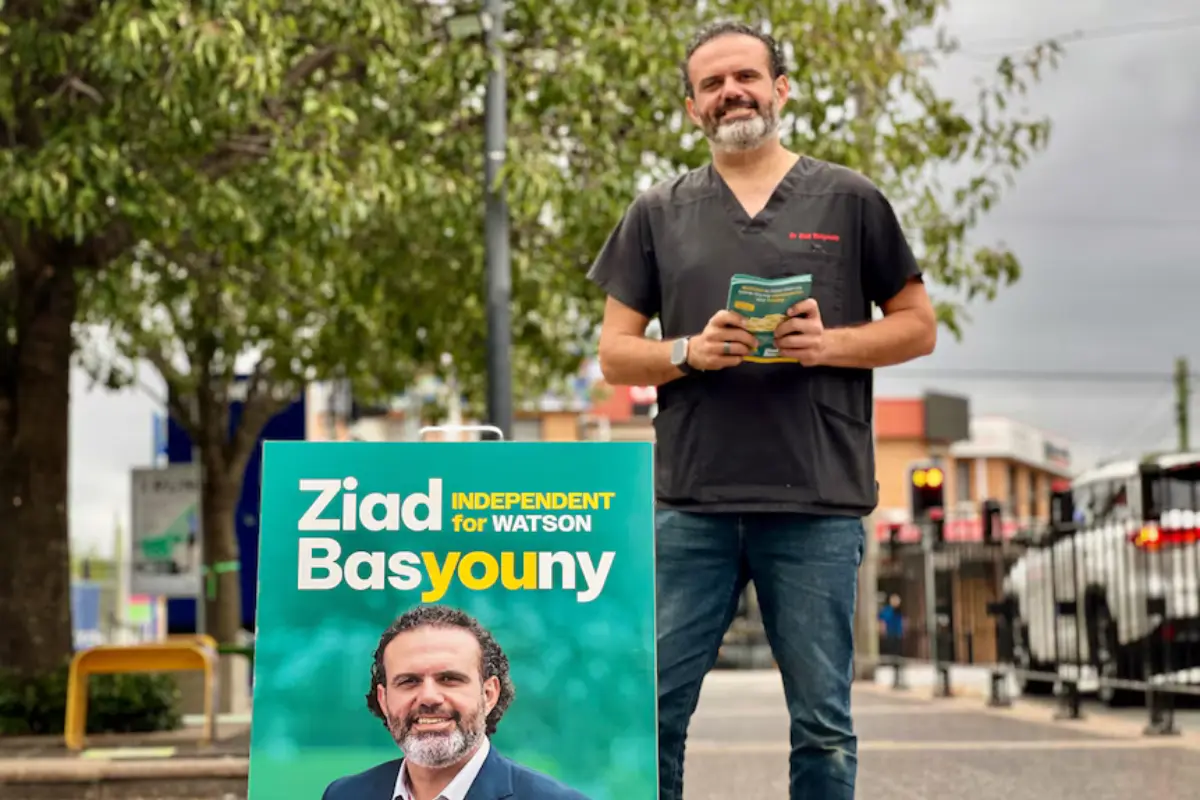

Ziad Basyouny is an independent doctor challenging Labor heartland Watson, driven by lived experience in healthcare, cost of living pressures, and community justice.
His journey from Egypt to Western Sydney reflects resilience, grassroots leadership, and a growing demand for accountable representation.
Introduction
Ziad Basyouny has emerged as a distinctive independent candidate in the federal seat of Watson, a region in south-west Sydney long viewed as Labor heartland. The electorate spans Greenacre, Bankstown, Punchbowl, Belmore, and Lakemba, making it one of the most multicultural electorates in Australia, with a large Muslim population.
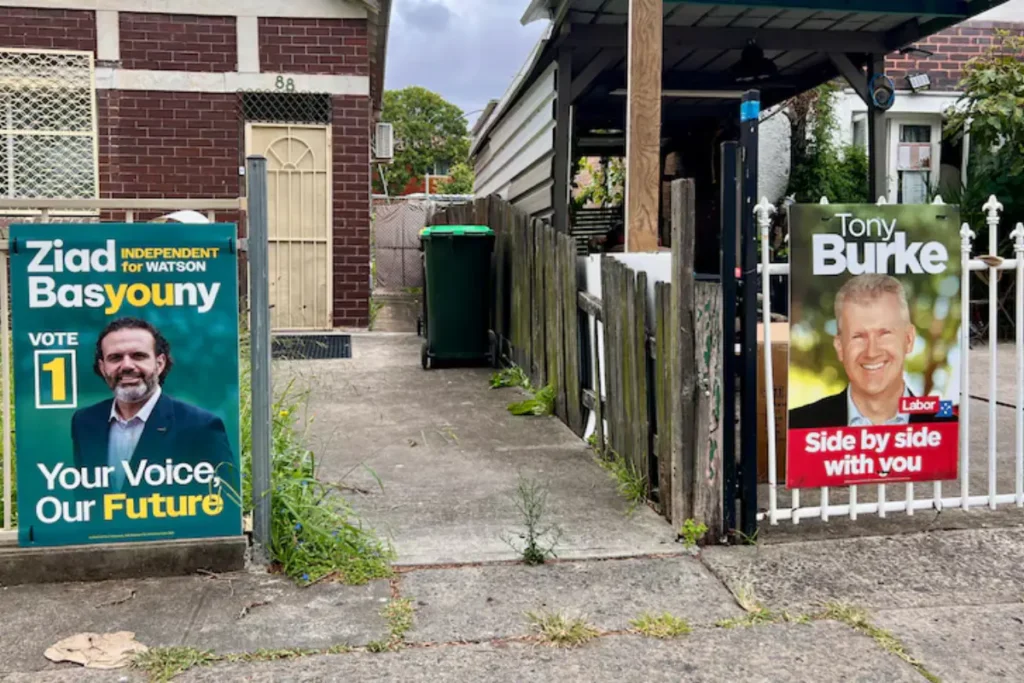
Rather than entering politics through party ranks, he brings lived experience shaped by healthcare access, cost of living pressures, and everyday struggles faced by Western Sydney families. His campaign challenges the long-standing hold of Tony Burke, the Home Affairs Minister representing the Australian Labor Party.
From my experience analysing community-driven political movements, candidates rooted in service professions often gain trust faster, and Ziad Basyouny fits this pattern through his background as a General Practitioner and emergency doctor.
Early Life and Migration Background
Born in Egypt, Ziad Basyouny completed medical school at a time when corruption and systemic inequality frustrated many young professionals. Those early experiences shaped his strong views on justice, fairness, and accountability.
Seeking opportunity, he chose migration and arrived in Australia at age 22, initially settling in Brisbane. Like many migrants, he worked as a computer salesperson and later at McDonald’s as a cleaner, navigating financial hardship and cultural isolation.
Living in regional Queensland tested his resilience, but passing the IELTS and entering the overseas-trained doctor pathway proved that perseverance and adaptability could open doors despite structural barriers.
Medical Career and Professional Journey
After meeting accreditation requirements, ziad basyouny began practising at Hervey Bay Hospital in Queensland, where he gained hands-on experience in emergency medicine. The work exposed him to rural healthcare limitations and workforce shortages.
He later relocated to Sydney, working across multiple hospitals before committing his career to Western Sydney, where health demand continues to outpace resources.
During the COVID response, he joined the Western Sydney Local Health District leadership team, contributing directly to pandemic coordination, an experience that deepened his understanding of public health systems under pressure.
Practice Ownership and Community Healthcare
Beyond hospital work, Ziad Basyouny became a practice owner, opening clinics in Greenacre and Lakemba to serve local families. His decision to continue bulk billing reflects a long-term commitment to accessibility rather than profit.
Through these clinics, he actively promotes healthcare equity and health literacy, helping patients understand preventative care rather than relying solely on emergency treatment.
From a professional perspective, this model builds trust and continuity, especially in areas where hospital wait times remain excessive and primary care acts as the first line of defence.
Entry Into Politics and Independent Candidacy
Years of working inside the system convinced Ziad Basyouny that healthcare problems often stem from political inertia rather than medical capacity. This belief pushed him toward independent candidacy in the Watson electorate.
He argues that safe seats discourage accountability, allowing major parties to overlook infrastructure and services without electoral consequence.
The stalled redevelopment of Bankstown Hospital and Canterbury Hospital, delayed for over 20 years, symbolises this neglect, especially when waiting times stretch to eight months compared with three months in nearby areas.
International Issues and Political Motivation
The Israel-Gaza conflict became a defining moment in Ziad Basyouny’s political journey. He openly criticised disparities in Palestinian visas, humanitarian delays, and broader humanitarian policy inconsistencies.
He viewed these issues not as distant foreign affairs but as matters directly affecting families within Western Sydney communities who maintain close ties abroad.
His stance reinforced his belief that true political accountability requires freedom from party discipline within the Westminster system, where crossing the floor often carries consequences.
Key Political Issues and Policy Focus
At the centre of his platform lies the cost of living, a daily concern for families facing rapid rent increases between 45 percent and 60 percent. Housing insecurity, in his view, fuels long-term social instability.
Healthcare remains equally critical, with emphasis on healthcare access, sustained hospital funding, and protection of bulk billing for vulnerable residents.
He also connects domestic policy with global responsibility, referencing immigration policy, humanitarian visas, Palestine, and civilian suffering as reflections of national values.
Community Sentiment and Volunteer Support
Strong community dissatisfaction has translated into visible grassroots support for Ziad Basyouny, particularly among medical professionals, students, teachers, and long-term residents.
Groups such as Muslim Vote and Muslim Votes Matter have voiced backing, while many former Labor voters signal a growing political shift.
Local surveys and polling indicate rising voter anger and broader political mobilisation across this multicultural electorate.
Public Engagement and Local Visibility
Unlike career politicians, Ziad Basyouny maintains daily contact with residents through his clinics and community interactions. This visibility reinforces trust beyond campaign cycles.
He regularly hears concerns directly from families, business owners, and patients navigating healthcare and financial stress.
From an analytical standpoint, this continuous engagement often proves more persuasive than traditional campaigning, especially in culturally diverse areas.
Criticism, Controversies, and Public Response
Following October 7 and the Hamas attacks, social media posts by Ziad Basyouny attracted public backlash and criticism from Jewish advocacy groups. Opponents questioned his suitability for office.
Multiple professional complaints reached regulatory authorities, including bodies overseeing medical registration.
Subsequent investigations found no breach, reigniting debate around free expression, civilian harm, and responsible political rhetoric in public life.
Labor Response and Tony Burke’s Position
Tony Burke, as sitting member and Home Affairs Minister, defended his record in Watson, citing UN General Assembly actions, a ceasefire vote, and increased humanitarian aid.
He warned that weakening Labor could benefit the Coalition, potentially elevating Peter Dutton after the election.
Despite this, many residents view cost of living focus and two decades of representation as insufficient to address entrenched local challenges.
Personal Life and Community Connection
Married with four children, Ziad Basyouny has maintained Watson residency for 17 years, reinforcing his long-term community presence.
As a clinic owner serving local hospitals and neighbourhoods daily, he experiences challenges alongside residents rather than observing them from a distance.
While open about his Muslim identity, he positions himself primarily as a grassroots candidate driven by voter accountability and service.
Broader Political Context
Political history shows that independent campaigns often reshape debate even without outright victory. Ziad Basyouny’s candidacy reflects this pattern within Western Sydney.
His presence has already forced greater attention toward infrastructure, visas, and community engagement.
From an observer’s perspective, this influence alone can shift future policy priorities.
Outlook and Electoral Impact
Most election analysts still describe Watson as a safe Labor seat, yet changing voter sentiment around the Gaza issue signals deeper shifts.
Emerging multicultural voting patterns suggest that moral positioning increasingly influences electoral behaviour.
Regardless of outcome, Ziad Basyouny has generated national attention, strengthened independent leverage, and highlighted the hung parliament possibility.
Conclusion
Ziad Basyouny represents more than a political challenge; he symbolises community frustration transforming into civic action. His journey from Egypt to Australia, from hospital wards to political platforms, reflects resilience shaped by lived experience.
By linking healthcare, housing, and humanitarian values, he reframes representation through service rather than allegiance.
In an era of declining trust, voices grounded in daily community life often resonate most, and his campaign underscores that shift.


Leave a Reply