
News
Expert Analysis by Michael Shoebridge on Regional Security


Michael Shoebridge is a leading Australian security expert and strategic affairs analyst, offering insights on Quad, AUKUS, China relations, and regional security. He highlights the challenges facing Australia’s defence policy, economic dependencies, and alliance commitments, emphasizing proactive strategies for national security and Indo-Pacific stability. His analysis provides a clear view of how strategic planning can safeguard Australia’s interests in a complex geopolitical environment.
Introduction
Michael Shoebridge is a respected Australian security expert and strategic affairs analyst whose insights shape discussions around defence policy, foreign policy, and regional security in the Indo-Pacific. His work focuses on the evolving dynamics of alliances such as the Quad and AUKUS, while also examining Australia’s relations with China, the United States, and other strategic partners. Across multiple platforms, including Sky News Australia, he highlights the challenges that national security and economic coercion pose for Australia. With his expertise in strategic analysis and hands-on knowledge of defence alliances, Shoebridge offers a grounded perspective on pressing geopolitical issues.
His commentary underscores how Australia navigates complex foreign relations, balancing cooperation with countries like Japan, India, and the United Kingdom. He emphasizes that regional stability depends not only on traditional military strength but also on investments in infrastructure, public health, and economic development. From working closely with policy-makers to studying multilateral frameworks, Michael Shoebridge consistently combines strategic foresight with practical recommendations for long-term security.
Understanding his approach provides insights into how alliances, trade dependencies, and defence commitments interact in today’s global environment. He draws attention to the subtle ways policy decisions can affect regional stability, urging Australia to adopt a forward-thinking stance that safeguards both national interests and cooperative partnerships.
Michael Shoebridge on the Quad and Indo-Pacific Strategy
The Quad — comprising India, Japan, the United States, and Australia — has historically served as a cornerstone for Indo-Pacific strategy. Michael Shoebridge points out that it was designed to promote a free and open Indo-Pacific, countering the regional dominance of Chinese power. He stresses that the Quad was meant to deliver public goods, including economic development, health security, and infrastructure, all while reinforcing democratic values.
He notes that under the Biden administration, leader-level summits between 2021 and 2024 strengthened regional stability, but since 2025, the grouping has faced challenges. Decay, shrinking influence, and the Trump administration’s shift in priorities have weakened multilateral cooperation. Shoebridge emphasizes that the Wilmington Declaration and earlier Quad commitments no longer reflect shared values in the current geopolitical environment.
Despite this, he maintains that the Quad retains potential if nations focus on strategic alignment and long-term cooperation. By combining foreign policy expertise with observations on public health, climate change, and trade, Shoebridge highlights the importance of revitalizing partnerships to maintain a resilient Indo-Pacific.
Trump Administration Impact on Quad Cooperation
Michael Shoebridge observes that the Trump administration’s America First approach has disrupted Quad cooperation, especially in areas like vaccine development, regional health security, and humanitarian assistance. Cuts to USAID, funding reductions, and public health scepticism have eroded the group’s capacity to respond effectively to crises. He underscores that climate change initiatives and clean energy projects have suffered, shifting priorities toward fossil fuel production.
He also highlights how multilateral meetings and trade policy decisions, particularly toward India, have strained trust within the Quad. The absence of coordinated maritime security and cyber cooperation reflects the diminished scope and relevance of the grouping. Shoebridge emphasizes that strong alliances depend on consistency, shared objectives, and mutual reinforcement of democratic norms.
By focusing on both security and economic development, Shoebridge argues that Australia and its partners can restore the Quad’s influence. He advises that strategic recalibration, including renewed emphasis on regional infrastructure and health programs, is necessary to counter decay and ensure lasting Indo-Pacific stability.
Michael Shoebridge on AUKUS and Australia First Defence Policy
The AUKUS submarine deal remains a key point in Australia’s defence policy, and Michael Shoebridge stresses the importance of a national review. While the United States aims to align the project with America First priorities, Australia must assess its defence commitments, industrial capacity, and strategic needs. He notes that the arrangement provides the US Navy with funding support, a base in Western Australia, and Australian personnel for submarine operations.
Shoebridge warns that production delays for Virginia-class submarines may weaken collective defence, particularly during periods of US-China military tension. He advises that Australia should weigh the costs, timelines, and impact on military readiness, while also exploring alternative long-range strike capabilities. His insights reveal how policy decisions and strategic alignment affect both regional security and alliance credibility.
He encourages Australia to focus on self-sufficiency and diversify its defence capabilities, balancing investments across the Army, Air Force, cyber security, and Navy. Shoebridge emphasizes that a proactive approach ensures Australia remains a capable and reliable partner while safeguarding national security and strategic interests.
Risks and Limitations of the AUKUS Submarine Deal
Michael Shoebridge explains that the AUKUS deal will deliver eight nuclear-powered submarines over thirty years, but actual deployable capacity remains limited. High maintenance requirements, a $368 billion budget, and diversion of skilled labour raise concerns about overall military effectiveness. He notes that Australia may appear as a free rider in the eyes of US allies if broader defence investment is neglected.
Shoebridge proposes alternative strategies, including long-range strike options such as the B-21 bomber, which could deliver faster, more cost-effective deterrence while preserving the AUKUS framework. He argues that balancing timeline constraints, strategic capability, and budget efficiency is critical for regional stability.
By focusing on operational readiness, military personnel, and resource allocation, Shoebridge stresses that Australia can maximize strategic benefits from AUKUS while mitigating risks from industrial delays and limited deployable submarines.
Michael Shoebridge on Australia–China Relations
Shoebridge warns that Australia’s trade dependence on China exposes the country to economic coercion and limits foreign policy flexibility. He points out past incidents where Beijing leveraged trade restrictions and controlled rare earths as strategic tools. Shoebridge advocates diversification of economic and defence partnerships, aligning with allies like the United States, Japan, and Europe to strengthen national security.
He critiques government strategies that focus solely on tourism and trade promotion, stressing that short-term gains can compromise long-term security. According to Shoebridge, balancing economic development with strategic independence is essential to avoid over-reliance on China.
Through careful analysis, he highlights that combining alliances, infrastructure investment, and military readiness ensures Australia maintains its regional influence. His perspective stresses that proactive planning safeguards both economic and security interests in the Indo-Pacific.
US Alliance Concerns and Defence Spending
Michael Shoebridge emphasizes the growing tension in the Australia–US alliance over defence spending and commitments to nuclear submarines. He observes that public demands from the Trump administration highlight the need for clear military obligations and strengthened operational readiness.
He cites exercises like Talisman Sabre as vital for demonstrating deterrence, regional preparedness, and strategic signaling. Shoebridge stresses that Australia must articulate its defence posture clearly to maintain alliance credibility and ensure national security.
By balancing budget allocation, military investment, and strategic communication, Shoebridge asserts that Australia can maintain strong ties with the United States, while independently managing regional security and responding effectively to potential China-related threats.
FAQs
Who is Michael Shoebridge?
Michael Shoebridge is an Australian security expert, strategic affairs analyst, and Director of Strategic Analysis Australia. He advises on defence policy, Quad, AUKUS, China relations, and US alliances, focusing on national security and regional stability.
What is Michael Shoebridge’s view on the Quad?
Shoebridge says the Quad weakened since 2025 due to America First policies, undermining shared values and multilateral cooperation. He calls for renewed focus on regional stability, economic development, and public health.
What does Michael Shoebridge say about AUKUS?
Shoebridge urges Australia to reassess the AUKUS submarine deal, considering cost, timeline, and strategic capability. He highlights defence readiness, military personnel, and regional security, and suggests alternative deterrence options.
Why does Michael Shoebridge criticise Australia’s China policy?
Shoebridge warns that trade dependence on China risks economic coercion. He recommends diversification, proactive foreign policy, and balanced national security to protect strategic interests and strengthen regional influence.


In the landscape of public interest, some stories do not come from the worlds of film, music, or politics, but from ordinary individuals whose lives become part of the broader conversation. Darci McDonald is one such name. An Australian woman who stepped into the spotlight not by choice but through a series of personal and legal developments that captured national media attention offers a compelling look at resilience, privacy, and how to move forward under public scrutiny.
Over the years, Darci McDonald has navigated the difficult line between living her life and being the subject of news reports and public discussion. While her story has been told in various outlets, it is important to look beyond the headlines to understand the full picture—where she came from, what challenges she faced, how the public responded, and where she stands today in 2026.
Background
Darci McDonald is based in Australia, and her early life remained largely private before she became known to the wider public. Like many people, she spent her formative years away from cameras and media attention, focused on personal growth, family, and community life. This background of normalcy makes her later experience all the more notable: the shift from a private citizen to someone whose name appeared regularly in news reports.
Her entry into public awareness began when she became associated with specific events and legal matters that drew significant coverage. It is important to note that the focus of this attention was not on her career or public achievements, but on personal circumstances that unfolded in the public domain. This distinction is key—she was not a public figure seeking fame but an individual whose life circumstances brought her into the media’s view.
Throughout this period, one consistent trait emerged: her determination to maintain her dignity amid external scrutiny. Those who have followed her story recognize that she has always prioritized her well-being and the stability of her personal life, even in the face of intense scrutiny.
Key Events
The turning point in Darci McDonald’s public profile came from a series of events that unfolded over time, leading to widespread media coverage. These events centered on legal and personal challenges that raised questions, sparked discussion, and brought her name into homes across Australia.
While the details of these matters have been reported in various news sources, the core of the story lies in how she responded to them:
Initial Attention: The first reports emerged when her personal situation intersected with legal proceedings, prompting curiosity from the public and journalists alike.
Media Scrutiny: As the story developed, coverage increased, leading to both factual reporting and speculation. This period tested her ability to protect her privacy while the facts were being established.
Sharing Her Journey: In time, Darci McDonald chose to share certain aspects of her experience. This was not done to seek sympathy, but to offer clarity, address misinformation, and highlight the reality of living through such challenges.
Navigating Complexities: Every step of the process involved balancing legal requirements, personal boundaries, and the public’s right to information—a challenge that many people never have to face.
One important observation from her journey is the difference between verified facts and public speculation. As with many stories in the media, some reports were based on confirmed details, while others relied on assumptions. Darci McDonald’s approach remained consistent: to let the facts speak for themselves and focus on what mattered most to her future.
Public Response
When a private individual becomes a subject of news, the public reaction is almost always mixed—and Darci McDonald’s case was no exception.
Support and Empathy
A large portion of the public responded with understanding. Many recognized that being in the spotlight under difficult circumstances is a heavy burden, and expressed respect for her ability to keep moving forward. Comments from readers and viewers often highlighted the importance of privacy, noting that everyone deserves the chance to work through personal struggles without constant observation.
Curiosity and Debate
At the same time, the story sparked natural curiosity. People wanted to understand the background of the events, the legal context, and how such situations unfold. This led to discussions about media responsibility, the line between public interest and private life, and how individuals are treated once they are in the news.
Lessons for Readers
From a broader perspective, Darci McDonald’s story offers useful insights:
Respect Boundaries: Even when information is available, respecting the privacy of those involved is essential.
Seek Verified Information: Not everything reported in the media is fully accurate; looking for reliable sources helps avoid forming opinions based on speculation.
Strength in Adversity: Her ability to stay focused on her well-being serves as a reminder that challenges can be faced with resilience.
Current Life (2026)
As of 2026, Darci McDonald has entered a new chapter. The intense media attention that surrounded her in previous years has settled, allowing her to refocus on what matters most: her personal life, family, and future goals.
Recent updates make it clear that her priority is stability and normalcy. She continues to handle any remaining matters related to her past with the same measured approach she has always shown. There is no indication of seeking further public attention; instead, she appears committed to living life on her own terms, away from the constant gaze of the media.
Looking at her journey up to this point, it is evident that her experience has shaped her perspective. She has demonstrated that even when circumstances force you into the public eye, it is possible to retain your sense of self and move toward a more peaceful future.
Conclusion
Darci McDonald’s story is not one of fame or celebrity achievement, but of resilience. It is a reminder that life can change unexpectedly, and that facing challenges with composure and determination makes all the difference.
From a private life in Australia to becoming a subject of national attention, and finally to finding balance again in 2026, her journey shows that the most important progress is often quiet and personal. For readers, it offers a valuable lesson: look beyond headlines, respect the humanity behind every story, and recognize that strength often lies in the choice to keep moving forward.
As Darci McDonald continues to focus on her personal life, her story remains a testament to the fact that, no matter what challenges arise, the path forward is always possible with patience and resolve.
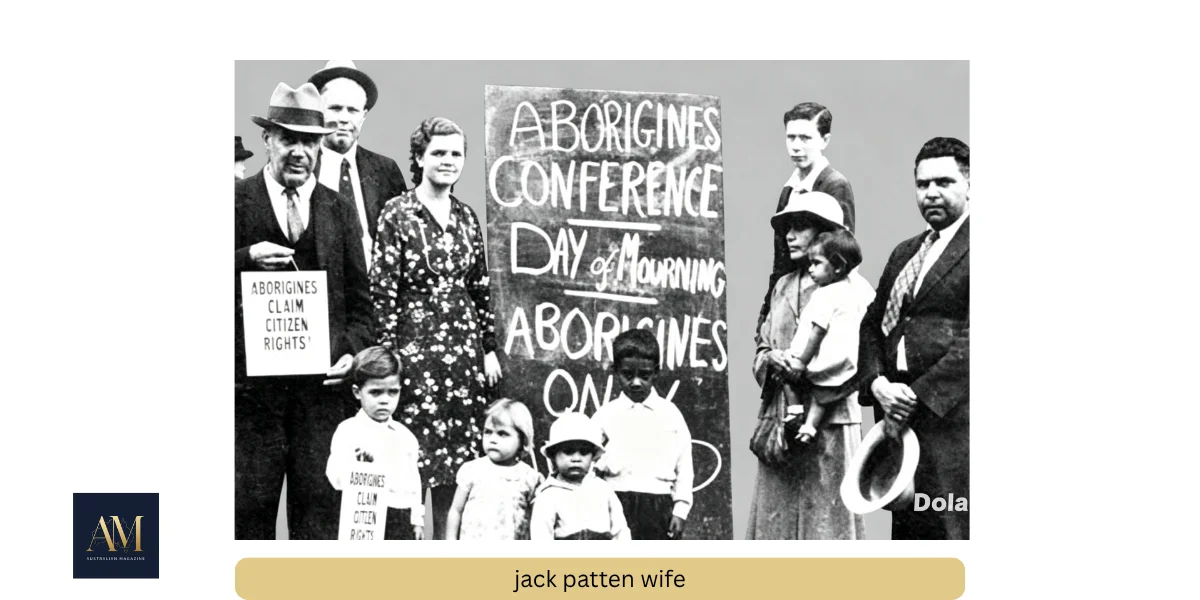
Jack Patten is remembered as one of the most important Aboriginal civil rights leaders in Australian history. He was a journalist, organizer, boxer, public speaker and campaigner who helped shape modern Aboriginal political activism. Yet behind his public work was a family life that deserves careful attention, especially his marriage to Selina Avery.
Selina Avery, sometimes recorded as Selena Avery in later references, was a Bundjalung woman from Baryulgil in northern New South Wales. She married Jack Patten in 1931, and together they had seven children. Their life unfolded during some of the hardest years for Aboriginal families in Australia: the Great Depression, restrictive government control, poverty, racism and the constant threat of official interference in family and community life.
To understand Jack Patten properly, we must also understand the world around Selina. She was not simply “the wife of” a famous activist. She was part of the family, community and social reality that shaped his political urgency.
Who Was Jack Patten?
John Thomas “Jack” Patten was born in 1905 at Moama, New South Wales, and grew up with deep connections to Cummeragunja, an Aboriginal community on the Murray River. He became one of the most powerful Aboriginal voices of the 1930s.
Patten was known for his intelligence, confidence and ability to speak directly to both Aboriginal communities and non-Aboriginal audiences. He worked as a laborer, boxed under the name “Ironbark,” and became increasingly involved in political organizing.
His major public contributions included:
- co-founding the Aborigines Progressive Association;
- helping organize the 1938 Day of Mourning;
- publishing The Australian Abo Call;
- campaigning for Aboriginal citizenship rights;
- speaking publicly against reserve conditions;
- supporting the 1939 Cummeragunja Walk-Off.
He was a man of action, but also a man of words. His speeches and writing helped challenge the idea that Aboriginal people should remain silent under government control.
Who Was Jack Patten’s Wife?
Jack Patten’s wife was Selina Avery. She was a Bundjalung woman from Baryulgil, near the Clarence River region of New South Wales. Public sources describe her as intelligent and educated, though far less is known about her life than about Jack’s.
That imbalance is common in historical records. The wives and partners of major political figures often carried enormous responsibilities while receiving little public recognition. In Aboriginal history especially, women’s roles were often under-recorded by official institutions, even when they were central to family survival and community continuity.
Selina’s life should therefore be approached with respect. The record confirms her marriage, children, and background, but it does not provide enough detail to speculate about her private thoughts or daily experiences.
How Jack Patten Met Selina Avery
Jack Patten met Selina Avery through his boxing years. As a young man, Patten traveled and fought under the name “Ironbark.” During that period, he encountered Selina in northern New South Wales.
Their meeting came at a time when Aboriginal communities were facing severe pressure from government policies, economic hardship and social exclusion. Marriage for Aboriginal couples in that era was not merely a personal matter. It often carried practical, social and political weight.
Jack and Selina married in 1931. Their family life soon unfolded against the backdrop of the Great Depression, when unemployment, poverty and housing insecurity affected many Australians, and Aboriginal families faced even harsher conditions.
Marriage and Family Life
Jack and Selina Patten had seven children. That fact alone gives a sense of the responsibilities they carried. Raising a large family during the Depression, while living under the restrictions placed on Aboriginal people, required strength and resilience.
During the 1930s, Jack and Selina lived for a time at Salt Pan Creek, an Aboriginal squatter’s camp in south-west Sydney. Salt Pan Creek was more than a place of hardship. It was also a politically important community where Aboriginal people discussed rights, injustice and resistance.
The camp became a gathering place for politically conscious Aboriginal people from different regions. Around fires, in conversations and through daily struggle, ideas were sharpened. Jack’s activism developed in that environment, but he did not live there alone. Selina and their children were part of that world.
Family life and political life were not separate. The conditions affecting Aboriginal families were exactly what Jack was fighting against.
Selina Avery’s Background
Selina Avery was Bundjalung and had connections to Baryulgil. That heritage matters because Aboriginal identity is not generic. It is grounded in people, Country, language, family and community.
The Bundjalung people have deep connections across northern New South Wales and south-east Queensland. Selina’s background linked Jack’s family story to the broader Aboriginal communities of northern New South Wales.
Public sources do not provide a full biography of Selina’s early life, education or later years. This absence should not be mistaken for a lack of importance. It reflects the limitations of historical recording, especially when it comes to Aboriginal women.
A respectful article should acknowledge what is known and avoid inventing what is not.
The Family Behind the Activist
Jack Patten’s public image is often that of a speaker, organizer and campaigner. But every activist lives a private life too. For Patten, that private life included marriage, children, poverty, movement between places and the pressures of public struggle.
Activism costs families time, energy and safety. Public speaking, organizing protests, publishing newspapers and confronting authorities are demanding acts. They require courage from the person in front of the crowd, but also patience and endurance from those at home.
Selina’s role may not be fully documented, but it is impossible to separate Jack’s public work from the family responsibilities surrounding him. He was not campaigning in the abstract. He was fighting for the rights of families like his own.
The Day of Mourning and Family Stakes
One of Jack Patten’s most important public acts was his role in the 1938 Day of Mourning. Held on January 26, 1938, it challenged the national celebration of 150 years of British colonization and declared that Aboriginal people were mourning the loss of land, rights and freedom.
The protest was not only symbolic. It demanded citizenship, equality before the law and the end of oppressive policies.
For Jack and Selina’s family, these issues were personal. Aboriginal families lived under systems that controlled where they could live, work, travel and raise children. The threat of child removal hung over many communities. Poor living conditions on reserves and settlements were not distant political issues; they affected real homes.
The Day of Mourning gave public language to private pain.
The Cummeragunja Walk-Off
In 1939, Jack Patten was involved in the Cummeragunja Walk-Off, one of the most significant Aboriginal protests in Australian history. Residents left Cummeragunja in protest against harsh conditions and poor treatment under government control.
Patten visited the community and spoke to residents about their rights. He was later arrested for his role in encouraging resistance.
Again, this was not politics removed from family life. Cummeragunja was connected to Patten’s own background. The protest was about dignity, survival and the right of Aboriginal people to refuse mistreatment.
Selina and the children lived in the same era of pressure and insecurity that gave urgency to such action.
Jack and Selina’s Children
Jack and Selina had seven children. One of their sons, John Trevor Patten, later became known as an Aboriginal elder. Public reporting after his death described him as someone who grew up immersed in political debate and campaigns against injustice.
That detail is powerful. It shows that Jack Patten’s activism was not only part of public history; it became a family inheritance. His children grew up around conversations about rights, racism, law and community survival.
Children of activists often inherit both pride and burden. They carry the memory of public struggle, but also its private cost.
Common Mistakes About Jack Patten’s Wife
One common mistake is leaving Selina Avery out of the story entirely. Jack Patten’s activism is better understood when his family context is taken into account.
Another mistake is treating Selina only as a footnote. Even when records are limited, her role as wife, mother and Bundjalung woman is historically meaningful.
A third mistake is confusing Jack Patten with unrelated modern figures who share similar names. The Jack Patten connected to Selina Avery was the Aboriginal civil rights leader who died in 1957.
A fourth mistake is assuming there is detailed public information about Selina’s private life. There is not, and responsible writers should not invent it.
A fifth mistake is ignoring Aboriginal women’s hidden labor in political history. Families and communities sustained many movements, even when only male leaders were recorded publicly.
Expert Tip: How to Read Family History in Activist Lives
When studying an activist like Jack Patten, look beyond speeches and organizations. Ask who was living with the consequences of the struggle.
Who raised the children when meetings ran late? Who endured poverty while political work continued? Who kept family connections alive when movement, arrest or hardship disrupted daily life?
These questions do not reduce Jack Patten’s achievements. They deepen them. They remind us that political history is also family history.
Current Relevance in 2026
Jack Patten died in 1957, so there is no current marriage or present-day family update in the usual celebrity sense. The relevance of “Jack Patten wife” in 2026 is historical. People search the topic because they want to understand the family behind one of Australia’s key Aboriginal rights leaders.
Selina Avery’s name deserves to be remembered alongside Jack’s because she was part of the life from which his activism emerged. Their children and descendants remain connected to a legacy of resistance, dignity and Aboriginal political leadership.
Conclusion
Jack Patten’s wife was Selina Avery, a Bundjalung woman from Baryulgil. They married in 1931 and had seven children. While Jack became famous as an Aboriginal activist, journalist and organizer, Selina’s life remained far more private and less documented.
That does not make her unimportant. It makes careful remembrance even more necessary.
Jack Patten’s public struggle was rooted in the realities of Aboriginal family life: poverty, discrimination, government control, community strength and the fight for dignity. Selina and their children were part of that reality.
To remember Jack Patten fully is to remember that history is not made only at meetings, protests and newspaper offices. It is also made in families, camps, kitchens, conversations and the quiet endurance of those whose names were not always placed at the center of the record.
Selina Avery belongs in that story.

Digital transformation has become a priority for organisations looking to improve productivity, customer experience and operational efficiency. Automation, cloud migration and new digital workflows are often introduced with the expectation that they will help businesses move faster and scale more effectively.
As Founder and CEO of NeonNow, a cloud-native customer engagement platform powered by Amazon Connect and AWS, I work with organisations navigating these changes every day. One of the most common challenges is ensuring that technology simplifies operations rather than adding complexity.
While many transformation programs achieve their technical objectives, they do not always deliver the business outcomes that were expected. New systems can introduce friction, increase process complexity and create additional work for employees if they are not implemented with clear operational goals in mind.
So what does sustainable transformation actually require? In practice, the answer comes down to four disciplines that many organisations still overlook.
1. Transformation should be measured by business outcomes
A completed rollout does not necessarily mean a transformation has been successful.
Technology projects are often tracked against implementation milestones, budgets and delivery timelines. While these measures are important, they provide only part of the picture.
A more meaningful assessment looks at whether employees can work more efficiently, customers receive better service and operations become easier to manage. These outcomes vary between organisations, but the principle remains consistent. Technology should support broader business objectives rather than become an objective in itself.
When organisations focus too heavily on deployment activity, they risk overlooking whether the transformation is delivering practical value across the business.
2. Automation can magnify existing inefficiencies
Automation can reduce repetitive tasks, improve consistency and help teams operate more efficiently. Its success, however, depends heavily on the quality of the process it is supporting.
Introducing automation into a poorly designed workflow rarely solves the underlying problem. In many cases, it simply accelerates existing inefficiencies and makes them harder to identify.
This is particularly evident in customer-facing environments, where complicated journeys, disconnected systems and unclear ownership can quickly affect service quality. Employees may spend additional time resolving exceptions, while customers encounter unnecessary friction.
The most effective automation programs begin with process design and operational clarity before technology is layered on top.
3. Employee productivity is often the first warning sign
The impact of digital transformation is frequently assessed through customer outcomes, but employee experience can provide an earlier indication of whether a program is working as intended.
When systems are fragmented or poorly integrated, employees are usually the first to feel the effects. They spend more time switching between platforms, searching for information and working around process gaps that technology was expected to eliminate.
These small inefficiencies accumulate over time and can affect productivity, consistency and service delivery.
At NeonNow, we regularly see the connection between employee experience and customer experience. Teams that have access to clear workflows and integrated systems are better equipped to deliver efficient and consistent support, particularly as organisations grow.
4. Sustainable transformation requires operational discipline
Successful transformation programs rarely depend on technology alone.
As organisations scale, systems must support increasing volumes of customer interactions, operational demands and service expectations. Cloud-native customer engagement technology, including Amazon Connect and the AWS ecosystem that supports it, can provide the flexibility needed to support that growth.
The organisations that achieve the strongest results are typically those with a clear understanding of what they are trying to improve and how success will be measured. They continuously evaluate performance, identify areas of friction and refine processes as business needs evolve.
Digital transformation remains a significant opportunity for organisations seeking long-term growth. The greatest value comes from aligning technology with operational objectives, employee needs and customer expectations.
From NeonNow’s perspective, the most successful transformation programs are those that make work simpler, improve customer outcomes and create a stronger foundation for sustainable growth.

Harrison Gilbertson in Fallen: Bringing a Fallen Angel to Life

Ian White Management: Guiding Athletes to Success

Comedy Lounge Perth: Where Laughter Comes to Life

The Enigma of Sirius Black: Exploring the Canonical Truth and the Quest for a Wife

The Velvet Curtain: A Senior Expert’s Guide to Melbourne’s 2026 Musical Theatre Renaissance
The Enigma of Sirius Black: Exploring the Canonical Truth and the Quest for a Wife
Darci McDonald: Resilience, Public Attention, and Life in 2026

Luca Sardelis: Talent, Versatility and Rising Career in Australian Screen

Mumford & Sons Brisbane: A Folk-Rock Connection Built on Energy, Emotion, and Sing-Alongs
The Velvet Curtain: A Senior Expert’s Guide to Melbourne’s 2026 Musical Theatre Renaissance
-
 Celebrity11 months ago
Richard Zachariah – The Story of a Gentleman Journalist
-
 Lifestyle4 months ago
Top Fashion Trends Australia 2026: What Australians Are Wearing Now
-
 News11 months ago
Greg Lynn Appeal-Full Timeline of the High Country Murder Case
-
 Lifestyle4 months ago
Spring 2026 Fashion Trends: The Complete Style Guide
-
 Celebrity10 months ago
Why the Neil Patrick Harris Amy Winehouse Cake Went Viral Again
-
 News11 months ago
Samuel William Davidson – The Oatlands Tragedy, Sentence & the Power of Forgiveness
-
 Entertainment12 months ago
The Unstoppable Rhea Ripley-WWE’s Australian Phenomenon
-
 Lifestyle10 months ago
Tina Arena Husband-Marriage, Long-Term Partner & Where Things Stand Now