
News
Zali Burrows-A Sydney Criminal Lawyer in the News


Zali Burrows’ name has been linked to some of the most talked-about court cases in Australia in the past few years. She is a criminal defense lawyer in Sydney who used to work with gangsters, terrorism cases, and high-stakes criminal trials. Now she is at the center of a national debate because she is defending former Liberal staffer Bruce Lehrmann.
At the same time, Zali Burrows has been under a lot of pressure to explain her own money, legal strategy, and career choices. Supporters see a lawyer who is willing to fight with controversial clients and powerful institutions. Critics say that the preparation was spotty, the bankruptcy saga was painful, and there were fights over defamation within the legal profession itself.
This article talks about who Zali Burrows is, how she built her criminal law practice, why she is so important to the Lehrmann case, and what her story shows about risk, reputation, and strength in the Australian legal system.
Who is Zali Burrows?
There isn’t much biographical information about Zali Burrows that is available to the public. Professional profiles say that she is an Australian lawyer who lives in Sydney and works mostly in criminal law. She runs her own firm, which is often called Zali Burrows Lawyers or Zali Burrows at Law.
Her LinkedIn profile says that she went to the University of Sydney, which is one of Australia’s top law schools and shows that she has had formal legal training. There hasn’t been much coverage of her early life, family, or reasons for choosing the law, which is different from the heavy coverage of her later cases and fights.
In the legal and media worlds, Zali Burrows is often called “colorful” and “high-profile.” These words are used by reporters and commentators to describe both her courtroom style and the unusual path her career has taken. She is not a barrister; she is a solicitor-advocate. This means that she goes to higher courts without the usual silk or junior counsel that are often seen in big appeals.
Zali Burrows and Her Journey Through Criminal Law
Before the Bruce Lehrmann case made her a household name, Zali Burrows was already known in New South Wales criminal courts for representing clients at the most difficult parts of the justice system. There have been reports that she is connected to gangland figures and terrorism-related claims, putting her in a tough spot where public opinion can be negative and the stakes are very high for defendants.
Zali Burrows is known for working with the infamous Sydney identity Salim Mehajer, which is one example of the kind of work she does. Court records show that Mehajer faced more fraud charges after allegedly forging the signatures of his lawyer at the time, Zali Burrows, and his sister on documents. Burrows told the court that the signature wasn’t hers, saying she was in court when the document was supposed to have been signed.
Her name has also come up in news stories about the long-running investigations into serial killer Ivan Milat. One article said that criminal lawyer Zali Burrows thinks that inmate Bassam Hamzy might know something about Milat’s missing victims. These kinds of high-profile, often controversial cases have helped her build her reputation in Australian criminal law.
The Defamation Appeal for Zali Burrows and Bruce Lehrmann
When Zali Burrows took on the defamation appeal for former Liberal staffer Bruce Lehrmann against Network Ten and journalist Lisa Wilkinson, it was a turning point in the public eye. Lehrmann sued over an episode of The Project that he said made it look like he had raped Brittany Higgins in Parliament House. The Federal Court eventually turned down his claim and found, on the civil standard, that he had raped Higgins.
When Lehrmann tried to appeal that decision, he couldn’t hire a senior lawyer because the Federal Court heard that he couldn’t afford his previous King’s Counsel. He hired Zali Burrows to help him with the appeal. ABC News calls her “a high-profile Sydney solicitor whose main area of expertise has been criminal law.” She was his only lawyer in front of the full bench of the Federal Court, where she faced off against some of the best defamation lawyers in the country.
The hearing’s coverage made it clear how far outside her normal area of work the case was. The Guardian said that Zali Burrows is “a well-known criminal defense lawyer but has no experience in defamation law and has not been admitted to the bar.” This lack of specialized knowledge showed at times: reporters saw her having trouble organizing detailed legal arguments or finding important parts of the huge appeal papers.
Still, Zali Burrows acted as if she was dedicated to the job even though it was hard. In one well-known exchange, she told the court, “I’m just going to try and do the best I can,” after saying sorry that her client had not been able to hire a silk.
In the end, the appeal did not work. The full court not only upheld the original decision, but also made it clear that Lehrmann knew Higgins did not agree to have sex and did it anyway. That result put Zali Burrows and her advocacy under even more scrutiny, with some people wondering if a more experienced defamation team could have made the arguments in a different way.

Zali Burrows and Bruce Lehrmann-What Comes Next
Zali Burrows has been involved in Lehrmann’s legal problems in more than just the Federal Court. She has represented him in several places, such as Queensland and Tasmania, because he is facing different criminal charges than the ones that happened at Parliament House.
Zali Burrows is defending himself in a case in Queensland where he is accused of raping a woman twice in Toowoomba in 2021. In that case, she has asked the court to let her see what she says is the full, unredacted phone data from the complainant. Court reports say that she told Judge Dennis Lynch that a second download of the woman’s phone made a report that didn’t match the first one, saying that “some key words were missing that were on the statement of facts.”
In another case in Tasmania, Zali Burrows represented Lehrmann when he was sentenced for driving a car without the owner’s permission. The Hobart Magistrates Court heard that medical certificates did not excuse his earlier absence. The magistrate reminded Zali Burrows that both she and her client had been ordered to appear. In the end, she called Lehrmann from court, and he changed his plea to guilty and showed up later that day.
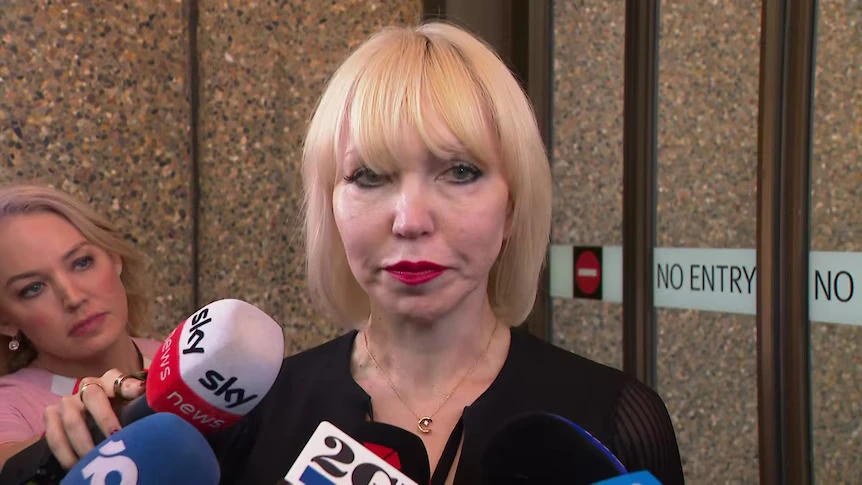
Zali Burrows has talked about the possibility of taking the case further, even after the failed defamation appeal. She told ABC News outside the Federal Court that she was talking to her client about a possible High Court application. She said, “We are hoping there will be supporters who will want to support Bruce” in paying for more legal action.
Those statements have been picked up by opinion writers. In one article in The Guardian, Zali Burrows said that Lehrmann had become “Australia’s most hated man” and “pretty much… the national joke.” The writer suggested that Burrows had since tried to replace this language with a more sympathetic line that he is a “inspiration” to those who say they are wrongly accused.
Zali Burrows’s public image and media profile
Zali Burrows has become very well-known in the media because of how intense the Lehrmann case is. She has been filmed and photographed many times outside of court buildings, where she has talked about her client’s case and the next steps in his legal strategy. After important decisions, ABC News has put out video clips with titles like “Zali Burrows speaks outside the Federal Court.”
At the same time, mainstream media have tried to put Zali Burrows in the bigger picture of Sydney’s criminal law. A “pinstripe power” feature on powerful lawyers said that she has “arguably Australia’s toughest legal gig” in trying to convince an appeal court that Lehrmann is a good person. The article said that this was a big change from her usual work, which “includes acting for gangsters and terrorists.”
Not all of the coverage has been good. Some people have said that she was outgunned by specialist defamation lawyers or not ready for the size of the appeal record. Others have pointed out times when judges were angry because she didn’t turn in her papers on time or because they were missing information. For example, at a Toowoomba hearing, her failure to turn in papers on time caused a key pre-trial argument to be delayed.
Still, the amount of attention shows how much Zali Burrows has become a part of the story. People who support Lehrmann see her as a strong supporter who is willing to help him when he needs it. For critics, she is a good example of the dangers of running complicated, high-stakes appeals without the usual layers of expert legal advice.
Zali Burrows’s financial and professional problems
Zali Burrows has had her own serious legal and financial problems in addition to her work for high-profile clients. Multiple decisions and news reports show that there has been a long-running disagreement over unpaid legal fees to a former firm. This disagreement led to bankruptcy proceedings and repeated attempts to challenge costs orders.
In 2023, Lawyers Weekly and other news sources reported on Zali Burrows’s 12-year fight with her own lawyers over a $12,000 bill. The Federal Court said that one of her attempts to avoid paying was “doomed to fail.” She was served with a bankruptcy notice for more than $130,000, which she was unable to get rid of.
Those reports show a lawyer who, even though she knows a lot about criminal law, has had a hard time dealing with the financial effects of long-term litigation on her own behalf. The story is complicated: she has claimed that previous companies charged her too much and treated her unfairly, but courts have repeatedly said that her legal arguments did not justify canceling the debts.
Zali Burrows is also suing Adam Houda, a well-known criminal lawyer, for defamation over tweets that had a zipper-mouth-face emoji. This is on top of the bankruptcy case. The Brisbane Times said that she claims the posts suggested she had acted so badly in court that a judge suggested disciplinary action, which she says is false and harmful.
Zali Burrows is a rare criminal defense attorney because she is both a representative and a party in contested, widely reported legal cases. This is because she has a lot of cases, personal lawsuits, and financial problems.
The Health, Workload, and Human Side of Zali Burrows
Reporters have also talked about the personal stress Zali Burrows is under, in addition to the courtroom drama. In March 2025, news.com.au said that she had become “seriously ill” with cancer. They got this information from court documents related to another part of the Lehrmann case.
That news changed how people saw Zali Burrows even more. Some people think it helps explain some of the problems and delays that have gotten the courts in trouble. On the other hand, it shows how hard it is to run a small criminal law firm while also being in charge of complicated, emotionally charged cases that are all over the news.
No matter what the exact effect of her illness on specific hearings was, the news shows that Zali Burrows has been trying to deal with serious health problems while also dealing with a lot of work and money problems. It reminds us that lawyers who are in the news every day are still people under a lot of stress, not just names in headlines.
What Australian Law Says About Zali Burrows
From a legal point of view, Zali Burrows is in a unique position between traditional criminal defense work and the modern, media-driven world of high-profile litigation. She is a solicitor-advocate who has chosen to appear in major appeals herself instead of hiring specialist barristers to do it for her. This makes her different from a lot of her peers.
Some people have praised her work for Lehrmann, saying that even unpopular defendants deserve a strong defense. Others have criticized her, saying that her lack of experience with defamation cases left her client vulnerable in a complicated appeal. Her own court cases, on the other hand, have sparked discussions about professional standards, how much things should cost, and how far self-representation can go.
At the same time, Zali Burrows is part of a bigger discussion about gender and visibility in the legal system. She is listed and talked about as one of Sydney’s most important criminal defense lawyers, along with senior counsel and long-time professionals in the field. Whether critics like her methods or not, the fact that she is in these rankings shows that determination, a strong profile, and a willingness to take on controversial issues can still change the balance in a field that is usually conservative.
Zali Burrows’s Future
In the future, Zali Burrows’s path will probably depend on three things: the outcome of Bruce Lehrmann’s ongoing cases in Queensland and any further appeals; the resolution of her own financial and defamation issues; and her ability to rebuild or strengthen her reputation with judges, colleagues, and clients.
If Lehrmann goes to the High Court, Zali Burrows could still be at the center of one of the most closely watched legal cases in the country. If he doesn’t, or if the High Court doesn’t give her special leave, she might go back to practicing law in New South Wales and beyond, focusing more on criminal defense, complicated trials, and appeals.
The story of Zali Burrows raises important questions for Australian law, such as who gets to argue the biggest cases, how far a solicitor-advocate can go beyond their main area of expertise, and what happens when the line between a professional advocate and a media figure starts to blur.
Conclusion
Zali Burrows went from being a criminal lawyer in Sydney to a national news figure. This shows how quickly a lawyer’s career can change when they take on a case that gets a lot of attention. Because she chose to support Bruce Lehrmann in his defamation appeal and criminal cases, often against well-funded opponents, she is now a well-known figure outside of court buildings and a frequent topic of conversation, both positive and negative.
At the same time, Zali Burrows has had to deal with her own legal and financial problems, like bankruptcy notices and defamation suits, all while being very sick and still working on other important cases.
People who follow Australian law can see how advocacy, reputation, risk, and personal circumstances all come together in the case of Zali Burrows. Her name is now firmly planted in the world of modern Australian law, and it will probably stay there for a long time. People will remember her as a brave defender of unpopular clients, a warning about going too far, or something else.
FOR MORE RELATED ARTICLES VISIT US AT AUSTRALIANMAGAZINE.COM.AU


In today’s media landscape, certain individuals find themselves thrust into the spotlight not by choice, but through circumstances that test their character. Leigh Pickford is one such person. An Australian woman whose life has drawn public attention due to deeply personal and legal matters, she has come to represent quiet strength and the human capacity to endure hardship while maintaining dignity.
Having followed public stories involving ordinary people facing extraordinary challenges for over thirty years, I’ve learned that these narratives often reveal more about society’s values than about the individuals themselves. Leigh Pickford’s journey offers powerful insights into resilience, privacy, and the complexities of living life under scrutiny.
Background
Leigh Pickford is based in Australia, where she has navigated life away from the limelight for much of her earlier years. Like many Australians, her story is rooted in everyday realities — family, community, and personal aspirations. However, specific events brought her into the public consciousness, turning private struggles into matters of broader interest.
What stands out in her background is the ordinary foundation from which her story unfolded. This relatability is perhaps why her experiences have resonated with so many. She represents countless individuals who face unexpected trials without the armour of fame or fortune.
Key Events
Leigh Pickford gained media coverage due to a series of personal and legal challenges that tested her resilience in profound ways. While the specifics of these events are complex and often deeply personal, they highlighted issues many face, but few discuss openly — matters involving justice, personal boundaries, and emotional endurance.
Throughout these difficult periods, Pickford demonstrated a level of composure that drew both sympathy and admiration. Public records and media reports portrayed her as someone determined to stand her ground and seek resolution through proper channels, even when the process was lengthy and emotionally draining.
In my experience covering similar stories, individuals like Leigh often become unintentional symbols. Their cases bring attention to systemic issues — whether in legal processes, support for those facing personal crises, or the role of media in shaping public perception.
Public Response
The public reaction to Leigh Pickford’s story has been mixed but notably compassionate in many circles. Many Australians followed her journey with interest, seeing in her experience reflections of their own vulnerabilities or those of their loved ones.
Social media played a significant role, with supporters offering messages of encouragement and calling for fairness. Others engaged in more critical discussions about privacy rights and the ethics of media coverage in personal legal matters.
This duality is common in high-profile personal stories. On the one hand, public attention can provide a sense of solidarity; on the other, it can intensify pressure on the individual at the centre. Leigh appears to have handled this delicate balance with notable grace, focusing on her own path rather than getting lost in the noise of public opinion.
Lessons on Resilience and Privacy
From an expert perspective shaped by decades of observing human stories, Leigh Pickford’s experience underscores several important truths:
- Strength is often quiet. True resilience doesn’t always look dramatic — it frequently appears as persistence, dignity, and the choice to keep moving forward.
- Privacy remains precious. In an age of constant sharing, protecting one’s personal boundaries becomes an act of self-preservation.
- Support systems matter. Family, legal counsel, and community networks play crucial roles in helping individuals weather storms.
- Media narratives evolve. Initial coverage may focus on drama, but deeper stories often reveal nuance and human complexity over time.
For anyone facing similar challenges, Leigh’s story serves as a reminder that seeking professional guidance, setting boundaries, and prioritising mental wellbeing are essential steps.
Current Life (2026)
As of 2026, Leigh Pickford continues to focus on her personal life and any ongoing matters related to her journey. Reports suggest she has maintained a relatively low public profile, concentrating on rebuilding stability and moving forward after years of intense attention.
This phase reflects a common pattern among those who have endured prolonged public scrutiny — a return to normalcy and private healing. While she may not seek the spotlight, her earlier experiences have left a lasting impression on those who followed her story.
Her current approach appears grounded and forward-looking, emphasising personal growth over continued public engagement. This choice deserves respect and highlights the importance of allowing individuals space to recover and redefine their lives on their own terms.
Conclusion: The Enduring Power of Human Resilience
Leigh Pickford’s story is ultimately one of human resilience in the face of adversity. While the details of her challenges are unique, the themes of strength, dignity, and perseverance are universal. In sharing aspects of her journey with the public, whether willingly or through circumstance, she has contributed to broader conversations about justice, privacy, and support for those navigating difficult times.
For readers, her experience offers valuable perspective: life can change unexpectedly, but the human spirit possesses remarkable capacity for recovery. As we move further into 2026 and beyond, stories like Leigh’s remind us to approach public narratives with empathy and to value the quiet strength that often goes unseen.
In a world quick to judge and even quicker to move on to the next headline, remembering the real people behind the stories — their struggles, their growth, and their right to privacy — remains as important as ever.

Many stories make their way into the public eye, but not all belong to people who sought that attention. Katherine Pearson is one such individual — an Australian woman whose life unexpectedly became a subject of media coverage and public discussion due to personal and legal circumstances. What began as private matters soon unfolded into a story that captured the nation’s curiosity, offering a clear example of how quickly life can change when circumstances bring you into the public eye.
Over time, Katherine Pearson has become known not just for the events that brought her into the news, but for the way she navigated those challenges. Her journey is defined by resilience, a commitment to privacy, and the determination to move forward despite scrutiny. This article explores her background, the key events that shaped her public profile, how people responded to her story, and where she is focusing her life as of 2026.
Background
Katherine Pearson is based in Australia, where she spent the majority of her early years living a quiet, private life. Before the events that brought her into the spotlight, there was little public information about her — she was focused on her personal responsibilities, family, and daily life, just like millions of others.
Her entry into public awareness was not a choice or a career move. It came when her personal circumstances intersected with legal and public matters that attracted the interest of news outlets and observers. This shift from private citizen to someone regularly mentioned in the media was sudden and unplanned, requiring her to adapt to a reality most people never have to face.
Throughout this transition, one consistent quality became clear: her desire to protect her own dignity and the privacy of those close to her. She did not seek fame or publicity, and her actions over the years have reflected a preference for letting facts speak for themselves rather than seeking attention or sympathy.
Key Events
The turning point in Katherine Pearson’s public profile came from a series of events that unfolded gradually, drawing increasing attention as details emerged. These events centred on complex personal and legal challenges that raised questions and sparked discussion across Australia.
While the specifics of these matters have been reported in various news sources, it is important to focus on the broader context of how they affected her life:
Initial Public Awareness: Coverage began when her situation became linked to formal proceedings and investigations. At this early stage, information was still limited, leading to a mix of accurate reporting and public speculation.
Growing Scrutiny
As the process continued, interest grew. Media outlets followed developments closely, and details — sometimes incomplete or taken out of context — began to circulate. This period brought significant pressure, as her personal life became open to interpretation and discussion by strangers.
Clarifying the Narrative
Over time, Katherine Pearson chose to share certain aspects of her experience. This was done not to gain attention, but to address misinformation, provide clarity, and ensure that her side of the story was understood. She spoke with measured care, focusing on facts rather than emotion.
Navigating Uncertainty: Every step of the journey required balancing legal obligations, personal boundaries, and the public’s interest. It was a complex path, and one that tested her patience and resolve at every stage.
One of the most important lessons from this period is the difference between verified facts and assumptions. As with many stories in the public domain, not everything reported was fully accurate, and distinguishing between the two required careful attention from readers and observers.
Public Response
When a private individual finds themselves in the news, reactions are almost always mixed — and Katherine Pearson’s case was no exception. The public response reflected a wide range of perspectives, offering insight into how society views people caught in difficult circumstances.
Support and Empathy
A large portion of the public responded with understanding and respect. Many recognised that being under constant media observation during a difficult time adds a heavy burden that no one should have to carry. People expressed sympathy for the stress and disruption she faced, and emphasised that everyone deserves the space to work through personal challenges without constant oversight.
Curiosity and Debate
Naturally, the story also sparked curiosity. People wanted to understand the context, the legal process, and how such situations unfold. This led to broader conversations about media responsibility, the line between public interest and private life, and how individuals are treated once they enter the public eye. These discussions highlighted important questions about privacy and fairness in the modern media landscape.
Key Takeaways for Readers
From Katherine Pearson’s experience, there are valuable lessons that apply to how we consume and respond to news stories:
Look for verified information: It is easy to form opinions based on headlines or incomplete reports, but reliable understanding requires seeking out confirmed facts.
Respect personal boundaries: Even when information is available, there is a difference between being informed and invading someone’s private life.
Recognise strength in quiet persistence: Facing public attention while dealing with personal challenges requires great inner strength, and moving forward without giving in to pressure is a notable achievement.
Current Life (2026)
As of 2026, the intense period of media attention has settled significantly. Katherine Pearson has entered a new chapter, where her focus has returned to what matters most: her personal life, family, and future stability.
She continues to handle any remaining matters related to her past with the same careful, thoughtful approach she has shown from the beginning. There is no indication that she seeks further public attention; instead, her priority is to restore the sense of normalcy disrupted by events in previous years.
Those who follow her story will note that her current choices reflect a clear intention: to leave the spotlight behind and live life on her own terms. This decision is itself a sign of how far she has come — from someone caught in a situation beyond her control, to someone who has reclaimed ownership of her own path.
Conclusion
Katherine Pearson’s story is not one of fame, achievement, or public ambition. It is a story about what happens when ordinary life intersects with extraordinary circumstances, and how a person responds to pressure, scrutiny, and uncertainty.
From her quiet beginnings in Australia, through the challenges that brought her into the public eye, to her focus on stability and privacy in 2026, her journey highlights the importance of resilience and self‑determination. It reminds us that behind every headline, there is a real person with feelings, rights, and a life that goes far beyond the details reported in the news.
For readers, her experience offers a valuable perspective: to look beyond the surface of any story, to respect the humanity of those involved, and to recognise that strength is often found not in being in the spotlight, but in having the courage to move forward and rebuild when the attention fades.

In the landscape of public interest, some stories do not come from the worlds of film, music, or politics, but from ordinary individuals whose lives become part of the broader conversation. Darci McDonald is one such name. An Australian woman who stepped into the spotlight not by choice but through a series of personal and legal developments that captured national media attention offers a compelling look at resilience, privacy, and how to move forward under public scrutiny.
Over the years, Darci McDonald has navigated the difficult line between living her life and being the subject of news reports and public discussion. While her story has been told in various outlets, it is important to look beyond the headlines to understand the full picture—where she came from, what challenges she faced, how the public responded, and where she stands today in 2026.
Background
Darci McDonald is based in Australia, and her early life remained largely private before she became known to the wider public. Like many people, she spent her formative years away from cameras and media attention, focused on personal growth, family, and community life. This background of normalcy makes her later experience all the more notable: the shift from a private citizen to someone whose name appeared regularly in news reports.
Her entry into public awareness began when she became associated with specific events and legal matters that drew significant coverage. It is important to note that the focus of this attention was not on her career or public achievements, but on personal circumstances that unfolded in the public domain. This distinction is key—she was not a public figure seeking fame but an individual whose life circumstances brought her into the media’s view.
Throughout this period, one consistent trait emerged: her determination to maintain her dignity amid external scrutiny. Those who have followed her story recognize that she has always prioritized her well-being and the stability of her personal life, even in the face of intense scrutiny.
Key Events
The turning point in Darci McDonald’s public profile came from a series of events that unfolded over time, leading to widespread media coverage. These events centered on legal and personal challenges that raised questions, sparked discussion, and brought her name into homes across Australia.
While the details of these matters have been reported in various news sources, the core of the story lies in how she responded to them:
Initial Attention: The first reports emerged when her personal situation intersected with legal proceedings, prompting curiosity from the public and journalists alike.
Media Scrutiny: As the story developed, coverage increased, leading to both factual reporting and speculation. This period tested her ability to protect her privacy while the facts were being established.
Sharing Her Journey: In time, Darci McDonald chose to share certain aspects of her experience. This was not done to seek sympathy, but to offer clarity, address misinformation, and highlight the reality of living through such challenges.
Navigating Complexities: Every step of the process involved balancing legal requirements, personal boundaries, and the public’s right to information—a challenge that many people never have to face.
One important observation from her journey is the difference between verified facts and public speculation. As with many stories in the media, some reports were based on confirmed details, while others relied on assumptions. Darci McDonald’s approach remained consistent: to let the facts speak for themselves and focus on what mattered most to her future.
Public Response
When a private individual becomes a subject of news, the public reaction is almost always mixed—and Darci McDonald’s case was no exception.
Support and Empathy
A large portion of the public responded with understanding. Many recognized that being in the spotlight under difficult circumstances is a heavy burden, and expressed respect for her ability to keep moving forward. Comments from readers and viewers often highlighted the importance of privacy, noting that everyone deserves the chance to work through personal struggles without constant observation.
Curiosity and Debate
At the same time, the story sparked natural curiosity. People wanted to understand the background of the events, the legal context, and how such situations unfold. This led to discussions about media responsibility, the line between public interest and private life, and how individuals are treated once they are in the news.
Lessons for Readers
From a broader perspective, Darci McDonald’s story offers useful insights:
Respect Boundaries: Even when information is available, respecting the privacy of those involved is essential.
Seek Verified Information: Not everything reported in the media is fully accurate; looking for reliable sources helps avoid forming opinions based on speculation.
Strength in Adversity: Her ability to stay focused on her well-being serves as a reminder that challenges can be faced with resilience.
Current Life (2026)
As of 2026, Darci McDonald has entered a new chapter. The intense media attention that surrounded her in previous years has settled, allowing her to refocus on what matters most: her personal life, family, and future goals.
Recent updates make it clear that her priority is stability and normalcy. She continues to handle any remaining matters related to her past with the same measured approach she has always shown. There is no indication of seeking further public attention; instead, she appears committed to living life on her own terms, away from the constant gaze of the media.
Looking at her journey up to this point, it is evident that her experience has shaped her perspective. She has demonstrated that even when circumstances force you into the public eye, it is possible to retain your sense of self and move toward a more peaceful future.
Conclusion
Darci McDonald’s story is not one of fame or celebrity achievement, but of resilience. It is a reminder that life can change unexpectedly, and that facing challenges with composure and determination makes all the difference.
From a private life in Australia to becoming a subject of national attention, and finally to finding balance again in 2026, her journey shows that the most important progress is often quiet and personal. For readers, it offers a valuable lesson: look beyond headlines, respect the humanity behind every story, and recognize that strength often lies in the choice to keep moving forward.
As Darci McDonald continues to focus on her personal life, her story remains a testament to the fact that, no matter what challenges arise, the path forward is always possible with patience and resolve.

Maggie Beer Products: A Gourmet Australian Range Built on Flavour, Simplicity, and Quality

Human-in-the-loop customer service: how NeonNow IQ divides contact centre work between AI and people

Saskia Beer: The Life, Work, and Lasting Legacy of an Australian Food Innovator

Love Island Australia 2026: Why Fans Chasing Fiji Villa Gossip Online Need to Slow Down Before They Click

Colin Beer: The Quiet Architect Behind a Gourmet Food Legacy

Ian White Management: Guiding Athletes to Success
Katherine Pearson: Strength, Resilience and Life Beyond the Headlines

Harrison Gilbertson in Fallen: Bringing a Fallen Angel to Life

Actors Equity Australia: Protecting and Empowering Performers

JK Kazzi: The Charismatic Voice of a New Generation of Cultural Influencers
-
 Celebrity12 months ago
Richard Zachariah – The Story of a Gentleman Journalist
-
 Lifestyle12 months ago
Matt Moran Liberal-From Service to Leadership in Western Australia
-
 Lifestyle5 months ago
Top Fashion Trends Australia 2026: What Australians Are Wearing Now
-
 Lifestyle5 months ago
Spring 2026 Fashion Trends: The Complete Style Guide
-
 News10 months ago
Beau Lamarre-Condon – Inside the Case, the Charges, and the Court Timeline
-
 News12 months ago
Samuel William Davidson – The Oatlands Tragedy, Sentence & the Power of Forgiveness
-
 Entertainment5 months ago
How Australian Players Are Choosing Their Online Casino in 2026
-
 Entertainment1 year ago
The Unstoppable Rhea Ripley-WWE’s Australian Phenomenon